






















Trump Declares Fentanyl a Weapon of Mass Destruction in Urgent Executive Order
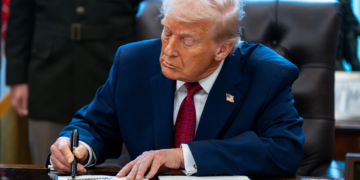
In a landmark move, President Donald Trump has issued an executive order categorizing illicit fentanyl and its precursor chemicals as Weapons of Mass Destruction (WMD). This declaration, made from the Oval Office, highlights the grave threat that fentanyl poses to public safety, likening it to chemical warfare.
Why It Matters
This executive order underscores the escalating fentanyl epidemic in the United States, which has led to the deaths of hundreds of thousands of Americans. By reclassifying fentanyl, the administration aims to ramp up governmental efforts against the drug trade and enhance national security through a more aggressive law enforcement and military response.
Key Developments
- Trump’s order states that even a minuscule dose of fentanyl can be lethal and is analogous to a chemical weapon.
- It calls attention to the role of drug cartels in fueling violence and instability across the Western Hemisphere.
- The directive mandates that various federal agencies, including the Justice and Homeland Security Departments, intensify their strategies against fentanyl trafficking.
- Officials anticipate that the WMD designation will facilitate deeper investigations and broader coordination among agencies.
Full Report
Executive Order Signed
On December 15, 2025, President Trump officially announced the classification of fentanyl as a WMD, stating, “Today, I’m taking another step to protect Americans from the scourge of deadly fentanyl flooding into our country.” The order emphasizes that the drug’s strength necessitates this urgent classification.
Drug Trafficking and National Security
The executive order outlines concerns about organized crime networks that produce and distribute fentanyl, labeling these operations a significant national-security risk. It reports that the cartels involved contribute to severe lawlessness and violence that extend beyond drug-related issues.
Government Action Plan
The directive requires a coordinated interagency strategy much like those reserved for addressing nuclear or biological threats. Key actions include:
- Heightened investigations and prosecutions by the Justice Department.
- Targeting traffickers with sanctions by the State and Treasury Departments.
- Potential military support to bolster law enforcement efforts.
- Updates to chemical-incident response plans by the Department of Homeland Security.
Press Secretary Karoline Leavitt promoted the order as a crucial measure for every American impacted by the fentanyl crisis. “This is yet another action in President Trump’s crackdown on fentanyl,” she stated.
Context & Previous Events
The order signifies a continuation of Trump’s hardline approach to drug trafficking, which has included previous legislation aimed at strengthening penalties for fentanyl-related crimes. It reflects growing concern about fentanyl’s role in the national public health crisis and its potential for use in large-scale terror attacks.






