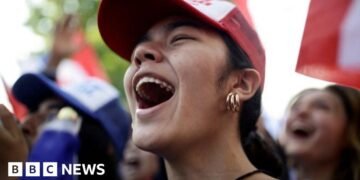























Chile Elects Hardline Conservative José Antonio Kast as President
In a striking political shift, Chilean voters have elected hardline conservative José Antonio Kast as their next president. His victory reflects a growing dissatisfaction with security, immigration, and crime, themes that resonated strongly among voters concerned about the country’s evolving social landscape.
Why It Matters
Kast’s election marks a notable pivot from left-leaning politics in Chile, placing the country among a rising wave of conservative governments in Latin America. This shift not only signals a change in domestic policy but also aligns Chile more closely with U.S. priorities on migration and security, especially under the Trump administration’s legacy.
Key Developments
- Kast has expressed admiration for former dictator Augusto Pinochet, stirring controversy amid a backdrop of historical trauma associated with his rule.
- The new president-elect promised to address immigration issues, proposing measures such as a border wall and the mass deportation of undocumented migrants.
- Government statistics show a significant increase in Chile’s foreign-born population, raising concerns among many Chileans about the impact of immigration on safety and social services.
- Responses from various sectors reveal a divided public; while some applaud Kast’s tough stance, others warn of the negative effects his policies could have on the economy and social cohesion.
Full Report
Shift to Conservative Leadership
José Antonio Kast’s election is indicative of broader trends in Latin America, where various nations have swung rightwards, often driven by public discontent with crime and governance under leftist administrations. Voters have increasingly looked to Kast’s hardline approach as a solution to their security concerns. In his acceptance speech, Kast emphasized that while he would implement an “emergency government,” he rejected any notions of authoritarianism.
Immigration as a Central Issue
Kast’s campaign heavily focused on immigration, pledging to build a border wall and carry out mass deportations. His supporters have echoed sentiments that the influx of undocumented migrants, particularly from Venezuela, has strained public resources and increased crime rates. According to estimates, nearly two million non-nationals reside in Chile, a marked increase that many residents claim has led to social upheaval.
Reactions from the Public
About 336,000 undocumented migrants currently live in Chile. The sentiments around immigration sharply divide the population; while some support Kast’s proposals, others fear that his rhetoric could lead to a rise in xenophobia. For instance, Gabriel Funez, a Venezuelan migrant, expressed concern not just for his safety but also for the increasing hostility towards foreign nationals. He described how conversations around him at work often reflected negative perceptions of migrants, reinforcing his feelings of alienation.
Economic Implications
The impact of Kast’s policies on the economy is a point of contention among business owners. Carlos Alberto Cossio, a Bolivian with extensive experience employing migrant workers, underscored that expelling unregistered foreign labor would disrupt the labor market and potentially inflate costs within various industries. He noted that many businesses depend on migrant workers for essential services, raising questions about the practicality of Kast’s immigration crackdown.
Political Landscape Ahead
Kast’s political party does not hold a majority in Congress, which may necessitate compromise on some of his more ambitious proposals. Nevertheless, the perception of governmental control in the face of rising crime and immigration anxieties seems to resonate with many voters searching for solutions. As Chile navigates this new political reality, both the domestic and international repercussions of Kast’s presidency will be closely monitored.
Context & Previous Events
Chile’s recent election is part of a broader regional trend, as other countries in Latin America, including Argentina, Bolivia, and El Salvador, have shifted from left to right in governance. The socio-economic backdrop of rising crime rates, corruption, and inflation has been pivotal in these electoral changes, with immigration becoming a focal point in voters’ concerns across the region.