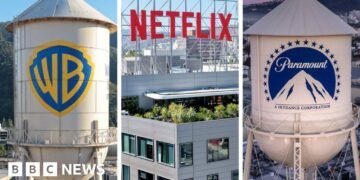























Fallout from Warner Bros’ Decline: A Hollywood in Turmoil
Warner Bros is facing a significant downturn as potential buyers, including Netflix and Paramount, position themselves for a possible acquisition. The decline of this historic studio is igniting widespread concern among Hollywood’s creative community, who fear job losses and further industry consolidation.
Why It Matters
The fate of Warner Bros goes beyond mere business transactions; it represents the shifting landscape of the entertainment industry. With the studio’s storied legacy, housing iconic titles from "Casablanca" to "Harry Potter," its sale signals a deeper crisis in Hollywood, marked by reduced job opportunities and diminishing creative diversity.
Key Developments
- Potential Buyers: Netflix and Paramount Skydance are the primary contenders for acquiring Warner Bros. Netflix may opt to buy Warner’s key assets in a piecemeal fashion, while Paramount Skydance is pushing for a full takeover.
- Industry Concerns: Hollywood insiders express fears about job losses and the implications of foreign investments, particularly in light of Paramount’s backing from various Middle Eastern funds.
- Leadership Controversy: David Zaslav, CEO of Warner Bros Discovery, has faced backlash over the studio’s decline, drawing comparisons to the fictional character Gordon Gekko from "Wall Street."
- Production Challenges: Following labor strikes that halted film and television production, the anticipated recovery has remained elusive, exacerbating fears of industry contraction.
Full Report
A Pivotal Moment for Warner Bros
As it stands, Warner Bros is at a crossroads, with executives exploring the sale of its assets amid a significant plunge in profitability. The studio has suffered losses exceeding $11 billion, highlighting the difference between its illustrious past and its current struggles. Hollywood creatives are caught in the middle, balancing the potential benefits and drawbacks of either buyer.
The Buyers: Netflix vs Paramount
Netflix is interested in acquiring Warner Bros’ prestigious properties like HBO and its extensive library. Insiders believe that under Netflix’s management, there’s a chance for creative freedom and continued theatrical releases. On the other hand, Paramount, backed by billionaires with political ties, raises concerns about censorship and ideological influence over film content.
“David Ellison is a right-wing billionaire Trumper,” remarked a camera assistant, highlighting the tensions surrounding Paramount’s potential influence. The stakes are high, as stakeholders from both studios weigh their options.
Job Losses and Creative Struggles
With the sale process, many fear job cuts will follow, particularly in a landscape that has already seen thousands laid off. The aftermath of the strikes earlier this year continues to resonate, as many in the industry are struggling to secure work. One actor, who has faced homelessness, expressed hope that the sale does not succumb to foreign ownership.
In contrast, some feel that Netflix’s acquisition could offer a fresh start. “It’s a difficult time, no matter how you slice it,” commented an anonymous producer. “But if you make good content, there’s always a way forward.”
The Expanding Crisis in Hollywood
For those at Warner Bros, the future appears uncertain. They lament that each merger diminishes the chances of getting projects funded and produced. The industry’s rhythm has shifted significantly since the pandemic began, with a stark drop in opportunities as traditional buyers merge or exit the field.
With Paramount Skydance’s recent hostile takeover bid, a power struggle within Hollywood seems inevitable, echoing broader trends of both consolidation and fragmentation.
Context & Previous Events
The pandemic has catalyzed numerous shifts in Hollywood, leading to a halt in productions and significant labor strikes earlier this year. Warner Bros has struggled under Zaslav’s leadership since the merger of Discovery, Inc. with AT&T’s WarnerMedia, resulting in job cuts and more streamlined operations. This series of transformations has left many employees worried about their futures in an increasingly challenging environment.
As this landscape continues to evolve, the efforts to secure a new owner for Warner Bros stand as a pivotal moment for all stakeholders in the entertainment industry.