






















Senior Hamas Commander Killed in Gaza City Strike
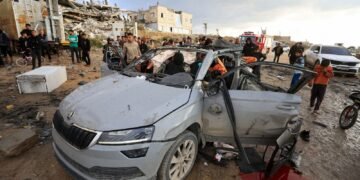
Israeli military operations have reportedly led to the death of Raed Saed, a senior Hamas commander implicated in the October 7 attacks on Israel. This strike is a significant escalation, occurring shortly after a ceasefire was established, and underscores ongoing tensions in the region.
Why It Matters
The killing of Saed highlights the fragile nature of the recent ceasefire between Israel and Hamas, which aimed to halt hostilities following a devastating conflict. It raises questions about the future of peace efforts and the stability of the region, as both sides grapple with increasing violence and civilian casualties.
Key Developments
-
Israeli officials confirmed the targeted kill of Raed Saed in Gaza City, citing his role in advancing Hamas’ weapons production.
-
The strike came in retaliation for a Hamas attack on Israeli soldiers that injured two.
-
Gaza health authorities reported five fatalities and over 25 injuries from the airstrike, though Hamas has not officially verified Saed’s death.
-
In a statement, Hamas condemned the attack, framing it as a breach of the ceasefire agreement but did not issue threats of retaliation.
- Since the ceasefire began on October 10, Israeli forces have reportedly killed at least 386 individuals in Gaza.
Full Report
Israeli Actions and Retaliation
The Israeli military’s operation against Raed Saed has been characterized as one of the most high-profile assassinations of a Hamas leader since the ceasefire started. Israel’s Prime Minister Benjamin Netanyahu and Defence Minister Israel Katz issued a joint statement acknowledging Saed’s strategic role within the organization, particularly in the context of weapons manufacturing and military operations.
Israeli officials noted that Saed had been instrumental in re-establishing Hamas’s military capabilities, which they deemed a serious violation of the accords in place following the cessation of hostilities.
Casualty and Aftermath
Health authorities in Gaza reported that the strike on Saed’s vehicle resulted in civilian casualties, indicating the complexities of military operations in densely populated urban areas. Responses from various quarters highlight growing frustrations about civilian safety amidst ongoing conflicts.
Hamas’s condemnation of the strike has emphasized the precariousness of recent peace efforts, suggesting that even with a ceasefire in place, the chances of further escalations remain high.
Ongoing Violence
Despite the ceasefire, violence has persisted in the region. Reports indicate that since the truce began, Israeli strikes have resulted in numerous Palestinian casualties, while Israel has also suffered losses, with three soldiers reportedly killed during this period.
Context & Previous Events
The ceasefire, which took effect on October 10, was an attempt to end a war that erupted following Hamas-led attacks that claimed 1,200 lives in Israel, primarily among civilians. In retaliation, the Israeli military has conducted extensive operations in Gaza, leading to significant Palestinian casualties, with over 70,700 deaths reported by health officials.
The toll of the conflict underscores the severe humanitarian crisis in the region, while efforts to stabilize the situation through diplomatic channels remain challenged by ongoing hostilities.