






















Belarus Frees 123 Political Prisoners Amid U.S. Sanctions Lifting
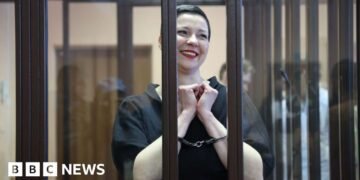
Belarus has announced the release of 123 political prisoners, including notable opposition leader Maria Kolesnikova, following a decision by the United States to lift sanctions on the nation. This significant move marks a potential shift in U.S.-Belarus relations, which have been strained since the controversial elections five years ago.
Why It Matters
This development represents a critical juncture in U.S. foreign policy, highlighting ongoing tensions between the United States and authoritarian regimes. The lifting of sanctions, particularly on potash—an essential export for Belarus—indicates a new strategy that could reshape diplomatic interactions in a region heavily influenced by Russia.
Key Developments
- Release of Political Prisoners: Prominent opposition activist Maria Kolesnikova and Nobel Laureate Ales Bialiatski are among the 123 individuals released from Belarusian custody.
- U.S. Sanctions Lifted: The U.S. has agreed to immediately remove sanctions on potash amid negotiations between American officials and Belarusian leadership.
- Transfer to Ukraine: Kolesnikova and 113 other prisoners were initially taken to Ukraine for medical assistance before being sent to Poland and Lithuania.
- Statements from Leaders: Svetlana Tikhanovskaya, the exiled Belarusian opposition leader, described the release as unexpected and a result of negotiations led by Belarusian President Alexander Lukashenko.
Full Report
Agreements and Reactions
U.S. Special Envoy for Belarus, John Coale, confirmed the lifting of sanctions during discussions in Minsk. He emphasized the importance of restoring relations between the two countries. In response to the news of her release, Kolesnikova’s sister expressed gratitude towards the U.S. administration, acknowledging the pivotal role of negotiations in her sister’s freedom.
After their release, Kolesnikova was conveyed to Ukraine, where she participated in her first video call with her sister. Khomich reported that Kolesnikova appeared healthy and optimistic about reuniting soon.
Notably, Bialiatski, who has also faced political repression, reaffirmed his commitment to fighting for those still imprisoned, illustrating that the struggle for democracy in Belarus is far from over.
U.S.-Belarus Relations
The recent sanctions adjustment signifies a dramatic change in U.S. policy toward Belarus, diverging from the European Union’s approach, which has focused on isolation and sanctions. Tikhanovskaya remarked on the complexities of leveraging sanctions, indicating that Lukashenko’s motivations are driven by economic interests rather than humanitarian concerns.
The Inside Story
The prisoners were released amid ongoing geopolitical tensions following Russia’s full-scale invasion of Ukraine in 2022, which utilized Belarus as a launch point. The reality of this situation underscores the precarious balance of foreign relations in the region, particularly as Belarus continues to navigate its position between Russia and the West.
Context & Previous Events
Kolesnikova’s imprisonment began in 2020 after contested presidential elections led to widespread protests and harsh crackdowns on dissent. The international community, including the U.S. and EU, has not recognized Lukashenko as the legitimate president due to the lack of free elections. The stringent sanctions imposed over the last five years intensified following Russia’s invasive actions in Ukraine, setting the stage for this recent diplomatic engagement.