






















Rising Tensions: NATO Chief Warns of Potential Russian Attack on Member States
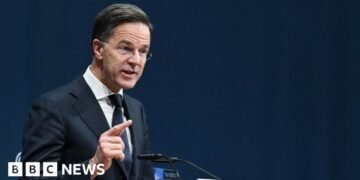
As concerns mount over escalating Russian aggression, NATO’s chief has issued a stark warning that Russia could potentially target a NATO member country within the next five years. This alarming statement, delivered by NATO Secretary-General Mark Rutte during a speech in Germany, emphasizes the importance of heightened military readiness against threats reminiscent of past wars.
Why It Matters
This warning underscores the growing tension between NATO and Russia, raising alarms about regional security and the stability of Europe. With a history of military conflict in the region and ongoing hostilities in Ukraine, NATO is under pressure to enhance its defense capabilities. The implications of a Russian attack could extend well beyond immediate military concerns, potentially reshaping geopolitical alliances and security strategies.
Key Developments
- Rutte emphasized the need for NATO to be prepared for potential large-scale warfare reminiscent of historical conflicts.
- Russia’s covert actions against Western societies have intensified, as noted by Rutte.
- U.S. President Donald Trump is actively working to end Russia’s invasion of Ukraine, launched in February 2022.
- Russian President Vladimir Putin recently claimed that Russia is not planning an attack on Europe but remains ready if conflict arises.
- NATO’s current defenses are sufficient for now, according to Rutte, but there is an urgent need for increased military spending and production among member states.
Full Report
Military Readiness Concerns
In his remarks, Rutte highlighted the necessity for NATO to prepare for warfare on a large scale, urging member states to bolster their military readiness. He pointed out that Russia’s economy has been operating on a war footing, producing significant quantities of military equipment including tanks, drones, and artillery at an alarming rate. This rapid production poses a challenge for NATO countries, as analysts suggest it may take years for Western European factories to match Russia’s output.
Russian Reassurances Questioned
Putin’s recent statements expressing that Russia has no intent to go to war with Europe have been met with skepticism. Rutte and other NATO leaders view these reassurances as insincere, especially in light of Russia’s actions in Ukraine, where Moscow had similarly downplayed its military intentions prior to its invasion in 2022.
Support for Ukraine as a Security Guarantee
Upholding Ukraine’s sovereignty is seen as crucial not just for that nation but for the overall security of Europe. Rutte warned that allowing Russia to dominate Ukraine could embolden further aggression against NATO member states. He underscored the strategic importance of steadfastly supporting Ukraine to prevent a more expansive conflict that could affect European security.
Context & Previous Events
The ongoing conflict in Ukraine has significantly influenced NATO’s current posture towards Russia. Since Russia launched its invasion of Ukraine in February 2022, NATO has taken measures to reinforce its defenses and support its Eastern European members. Military spending commitments among NATO allies have increased under pressure from U.S. leadership, highlighting a collective acknowledgment of potential threats posed by Russia’s actions in the region. The emergence of hybrid warfare tactics, including cyber-attacks and disinformation campaigns aimed at NATO countries, has further complicated the security landscape in Europe.