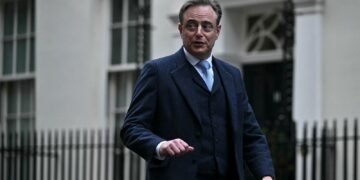























Belgian Prime Minister Skeptical on Ukrainian Loan from Frozen Russian Assets
The Belgian Prime Minister Bart De Wever expressed hesitance regarding the proposal to provide Ukraine with a loan sourced from frozen Russian assets, emphasizing the need for a European-wide approach. His remarks follow discussions with UK Labour leader Sir Keir Starmer about potentially utilizing the substantial amount of immobilized Russian assets stored in Belgium to assist Ukraine during its ongoing conflict with Russia.
Why It Matters
The situation is crucial as European nations grapple with how to assist Ukraine while navigating complex legal and financial implications related to the frozen assets. With Russian assets totalling approximately €190 billion in Belgium alone, this debate highlights both the potential benefits and significant risks associated with confiscating these funds for Ukraine’s defense. The resolution could have long-lasting ramifications for European unity and legal precedent regarding state assets.
Key Developments
- De Wever met with Sir Keir Starmer to discuss using frozen Russian assets to support Ukraine.
- The European Council is nearing a decision on the proposal, although legal challenges remain a possibility.
- De Wever is wary of risks tied to any potential loan and insists on shared liability among European partners.
- Asserts that Belgium is not the sole nation holding immobilized Russian assets, mentioning the UK and France.
- Ukrainian President Volodymyr Zelenskyy plans a visit to Berlin for further discussions about military support.
Full Report
Negotiations and Stance on Frozen Assets
During a recent interview, Prime Minister Bart De Wever conveyed his skepticism regarding the viability of offering a loan to Ukraine derived from frozen Russian assets. He emphasized the necessity for collaboration among European nations, stating, “Will we do it with a European solution or with the reparation loan? I’m skeptical about a loan. I’m not going to lie.” De Wever outlined his concerns regarding the liabilities associated with such financial maneuvers.
Discussion with UK Leaders
Following a meeting with Sir Keir Starmer at Downing Street, De Wever mentioned the need for a system that distributes risks involved in utilizing the frozen funds. He stated, “If you go together, then you’re under a big umbrella and you’re not the only one that is exposed to all the risks.” His remarks came as he noted the significant amount of frozen Russian assets in Belgium compared to those in the UK.
Reactions from Other Leaders
In related developments, EU and Hungarian officials expressed their concerns regarding the legality of the EU’s measures to indefinitely freeze Russian assets. Hungarian Prime Minister Viktor Orban criticized the European Commission, accusing it of undermining European law. Meanwhile, Slovakian Prime Minister Robert Fico voiced his refusal to endorse any proposal that would facilitate military expenditures for Ukraine.
Ongoing Conflict in Ukraine
As these discussions unfold, the situation in Ukraine remains dire. Reports indicate that Russia has launched thousands of missiles and drone attacks this year alone, targeting the nation’s energy infrastructure. Ukrainian officials continue to highlight the severe implications of ongoing military operations on their energy systems.
Context & Previous Events
De Wever’s comments come as European leaders grapple with how to best support Ukraine amid its prolonged conflict with Russia. The EU has imposed an indefinite freeze on Russian assets within Europe, aimed at restricting funding for the war effort. The recent meeting between De Wever and Starmer aligns with broader efforts to find solutions to Ukraine’s financial demands during this challenging period.