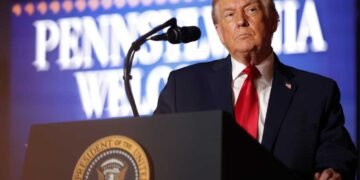























President Trump Promotes Economic Optimism Amid Public Skepticism
U.S. President Donald Trump is actively promoting a narrative of economic growth, asserting that his policies are paving the way for a better financial future. However, new polls indicate that many Americans are not only doubtful of this portrayal but are grappling with rising living costs, challenging the effectiveness of Trump’s messaging.
Why It Matters
The current economic landscape is critical for the administration, especially as it navigates public perceptions following a pivotal election cycle. The disconnect between the administration’s optimistic claims and the lived experiences of many Americans highlights the challenges faced by the Trump presidency in addressing economic frustrations adequately.
Key Developments
-
Economic Messaging: Trump emphasized a robust economy during a recent event in Pennsylvania, referring to criticisms of affordability as a "Democratic hoax."
-
Financial Aids: The White House introduced a $12 billion package aimed at supporting farmers, in an effort to demonstrate proactive economic measures.
-
Public Perception: Despite some indicators suggesting falling gas prices and wage increases, many Americans believe that the administration is out of touch with their realities.
-
Inflation Concerns: Elevated inflation rates persist, partly driven by tariffs, complicating the administration’s narrative.
- Biden’s Influence: Administration officials frequently attribute economic hardships to policies from the Biden era, with Treasury Secretary Scott Bessent noting that voters are influenced by media coverage of these issues.
Full Report
Trump’s Economic Narrative
During a speech at the Mount Airy Casino Resort, President Trump portrayed a thriving economy, asserting that policies from his administration are setting the stage for long-term prosperity. However, polls reveal a stark contrast, as many citizens express skepticism regarding affordability and rising living costs.
In addressing this disconnect, Trump downplayed concerns, labeling the focus on affordability as a partisan strategy. He remarked, "You know, they always have a hoax. The new word is affordability," reflecting a dismissive attitude towards the concerns of average Americans.
Officials’ Perspectives
Administration officials, including Treasury Secretary Bessent, have joined the conversation, suggesting that media portrayals contribute significantly to public perceptions of economic hardship. Bessent stated, "I think the president is frustrated by the media coverage of what’s going on." Economists like Michael Strain have noted the unusual nature of engaging in an argument with the public over their perception of economic conditions.
Despite the administration’s claims of a booming economy, voters continue to feel the strain of high inflation and other burdens. Powell highlighted that while costs are high, not all stem from the current inflation rate, indicating a deeper issue related to previous economic conditions.
Policy Responses and Challenges
With rising scrutiny, Trump has been reluctant to acknowledge how trade policies might have negatively impacted many Americans. While the White House remains confident that their economic strategies, such as tax cuts and deregulation, will lead to positive outcomes, experts argue that these policies may not be sufficient to alleviate immediate affordability concerns.
Economists suggest potential remedies, such as revising Obamacare premiums and addressing tariffs, which could help ease the financial burden on Americans. Yet, the administration has indicated that it plans to maintain its current policy course.
Context & Previous Events
This week, President Trump’s economic messaging notably followed significant electoral losses for the Democrats, which they attributed to a focus on urgent kitchen table issues. The administration’s stance has created a narrative that shields it from accountability, as officials continue to link the current economic climate to decisions made by the previous administration. As the Trump presidency continues, the challenge remains in bridging the divide between economic indicators and tangible impacts felt by Americans.






