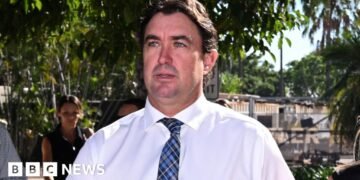























Celebrity Crocodile Wrangler Sentenced to Prison for Evidence Tampering
Matt Wright, the celebrity crocodile wrangler known for his roles on National Geographic’s Outback Wrangler and Netflix’s Wild Croc Territory, has been sentenced to five months in prison after being found guilty of tampering with evidence related to a fatal helicopter crash. The incident, which occurred in February 2022, resulted in the death of Wright’s co-star Chris “Willow” Wilson and left the pilot, Sebastian Robinson, with severe injuries.
Why It Matters
The case highlights significant issues concerning safety practices in the helicopter industry and the responsibilities of high-profile individuals. It raises questions about accountability within the community and the potential impact of celebrity influence on legal proceedings. Wright’s conviction and sentencing serve as a reminder of the legal consequences associated with efforts to obstruct justice.
Key Developments
- Matt Wright was sentenced to 10 months in prison, with five months to be served, and a A$5,000 ($3,300) fine.
- The court found him guilty of lying to police and pressuring a hospitalized witness after the helicopter crash.
- The jury could not reach a verdict on a third charge involving Wright allegedly asking a friend to destroy evidence.
- Wright’s lawyers intend to appeal the guilty verdicts.
- Acting Justice Alan Blow noted that Wright showed no remorse but deemed him unlikely to reoffend significantly.
Full Report
Details of the Case
The NT Supreme Court’s trial focused on a helicopter crash that occurred in Arnhem Land, approximately 500km east of Darwin, during a crocodile egg harvesting operation. Wright was not on the helicopter but was among the first to arrive at the crash site. Prosecutors alleged that he lied to investigators about the helicopter’s fuel levels and attempted to persuade the injured pilot, Sebastian Robinson, to alter flight records.
Secret recordings presented during the trial indicated discrepancies between Wright’s statements and the actual evidence. Prosecutors contended that Wright’s actions were motivated by a desire to conceal that he had been falsifying flight records to evade maintenance obligations. The court was also informed that tampering with flight hour records was common within the Northern Territory helicopter community.
Judicial Remarks
During sentencing, Justice Blow acknowledged Wright’s previous contributions to the community, yet emphasized the seriousness of his crimes. Prosecutor Jason Gullaci SC argued that Wright’s attempts to solicit changes to flight records signified a calculated effort to obstruct justice, something that warranted immediate imprisonment. Wright’s defense attorney insisted that his actions were not driven by malice but rather an effort to support a friend.
The troubled dynamics surrounding Robinson’s hospitalization were also highlighted, including conflicting testimonies about his wellbeing and the influence of substance use. Despite a blood test indicating trace amounts of cocaine, Robinson maintained he had no memory of the crash, leading to additional scrutiny regarding his mental state at the time.
Context & Previous Events
The trial revealed systemic issues within the Northern Territory’s helicopter operations, drawing attention to practices such as “popping the clock” to avoid maintenance checks. This term refers to the manipulation of flight hour meters that ultimately compromises safety standards. The crash that resulted in the fatalities and severe injuries has raised ongoing discussions about regulatory oversight and accountability for safety practices in the aviation sector.