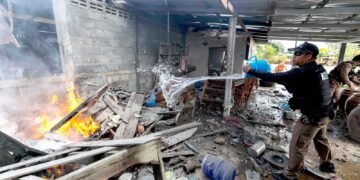























Civilians Caught in Resurgence of Thailand-Cambodia Conflict
The recent resurgence of violence along the Thailand-Cambodia border has resulted in civilian casualties and a humanitarian crisis, just days after a tenuous ceasefire brokered by former U.S. President Donald Trump. Reports indicate that at least three Thai civilians have lost their lives amid ongoing clashes, while Cambodia has reported nine civilian deaths, including a baby.
Why It Matters
This escalation not only threatens regional stability in Southeast Asia but also underscores the complexities surrounding territorial disputes between the two nations. With a historical backdrop of animosity, the conflict poses significant risks to thousands of displaced civilians and calls into question the efficacy of international mediation efforts.
Key Developments
- Casualties: Three Thai civilians and nine Cambodian civilians have been killed in the recent hostilities, with many more injured on both sides.
- Military Engagements: More than a dozen locations along the 508-mile border witnessed intense fighting, marking the most significant escalation since July’s five-day battle.
- Displacement: Hundreds of thousands have been evacuated from bordering areas in both countries due to the violence.
- International Mediation: Trump has expressed confidence in his ability to mediate an end to the violence but faces skepticism from Thailand regarding foreign involvement.
Full Report
Civilian Casualties and Military Strikes
The Thai military reported that heavy fighting resumed along the border on Wednesday, leading to the casualties of both civilians and military personnel. So far, the conflict has claimed the lives of at least nine soldiers from Thailand and resulted in over 120 injuries. Meanwhile, Cambodia’s reports indicate that their civilian toll includes a baby among the deceased and numerous others wounded.
Evacuations and Humanitarian Concerns
As violence escalates, hundreds of thousands of residents from border regions in both countries are fleeing to safer areas. Humanitarian organizations are likely to face challenges as they attempt to deliver aid to those impacted by the conflict.
Statements from Leaders
Both Thailand and Cambodia have engaged in a blame game over the ongoing violence. The Thai Prime Minister, Anutin Charnvirakul, has stated that he is prepared to discuss the situation should Trump reach out. Trump’s previous efforts in July successfully halted fighting but many remain skeptical about the effectiveness of his interventions this time around.
Accusations of Aggression
Cambodia’s defense ministry accused Thailand of “brutal acts of aggression” against civilian targets, including schools and ancient temples. Thai officials, however, counter that their military actions do not target civilian infrastructure, further escalating tensions between the two nations.
Context & Previous Events
The current conflict has historical roots stemming from territorial disputes that date back to a 1907 map established during Cambodia’s French colonial period. An unfavorable ruling from the International Court of Justice in 1962, which awarded sovereignty over certain areas to Cambodia, continues to fuel resentment among many Thais. Despite a ceasefire agreement reached last October, the ongoing propaganda war and sporadic skirmishes have kept tensions high.
The pressing question remains whether international mediation can truly bridge the divide in the face of such entrenched historical grievances.