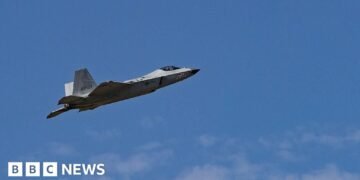























South Korea Protests Chinese and Russian Incursions into Air Defense Zone
South Korea has officially lodged a complaint with the Chinese and Russian defense attaches in the country following the entry of military aircraft from both nations into its air defense identification zone (ADIZ). This development raises concerns over regional security and the ongoing tensions surrounding airspace sovereignty.
Why It Matters
The incursion of foreign military aircraft into South Korean air defense zones highlights ongoing geopolitical tensions in East Asia. It not only tests South Korea’s airspace security measures but also reflects broader military cooperation between China and Russia. As both nations engage in joint exercises, the implications for regional stability become increasingly critical.
Key Developments
- On Tuesday, seven Russian and two Chinese military aircraft briefly entered South Korea’s air defense identification zone.
- In response, the South Korean military deployed fighter jets to prepare for any emergencies.
- Both nations’ aircraft regrouped in airspace near Japan’s Tsushima Island.
- South Korea’s defense ministry reiterated its commitment to actively respond to foreign aircraft activities in compliance with international law.
- China confirmed a joint patrol with Russia in the East China Sea as part of an annual cooperation plan.
- This marks a continuation of similar incidents since 2019, with both Russia and China not recognizing South Korea’s ADIZ.
Full Report
Following the incursion of multiple military aircraft on Tuesday, South Korea’s defense ministry took swift action by deploying fighter jets to respond to the situation. While the foreign aircraft entered the nation’s air defense zone, officials emphasized that they did not violate South Korea’s sovereign airspace.
During this incident, Russian aircraft entered the Korean Air Defense Identification Zone (Kadiz) near Ulleung Island and the disputed Dokdo islands, while Chinese planes were located near Ieodo, a submerged rock that is also a point of contention between Seoul and Beijing. According to statements from South Korean Joint Chiefs of Staff officials, both sets of aircraft operating in proximity to each other raised alarms.
In lodging the complaint with Chinese and Russian military attaches, South Korea aims to underscore its commitment to airspace security and international law. “Our military will actively respond to aircraft activities from neighboring countries in the Kadiz in compliance with international law,” stated a spokesperson from the defense ministry on Wednesday.
The incident follows a pattern of similar incursions by Chinese and Russian aircraft over recent years, with both nations often conducting joint exercises without prior notification to South Korea, thereby escalating regional tensions.
Context & Previous Events
In March of this year, South Korea again deployed fighter jets in response to the presence of several Russian warplanes in its air defense zone. This pattern of incursions dates back to 2019, with both China and Russia consistently entering South Korea’s ADIZ without recognition or acknowledgment of its boundaries. Additionally, both countries have laid claims to certain disputed territories in the region, complicating the dynamics of airspace governance.






