






















Lithuania Declares State of Emergency Over Balloon Smuggling Threat
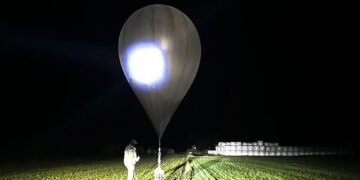
Lithuania has declared a state of emergency in response to disruptive balloon incidents reportedly linked to smuggling operations from Belarus. The government’s actions come as Vilnius Airport has temporarily closed due to these incidents, which Lithuania describes as a "hybrid attack" aimed at its national security.
Why It Matters
The situation has escalated tensions between Lithuania and Belarus, a close ally of Russia. This conflict poses significant implications for civil aviation safety and regional stability, especially considering Lithuania’s role as a NATO member and its support for Ukraine amid ongoing tensions with Russia.
Key Developments
- Lithuania’s state of emergency officially cites disruptions to civil aviation and national security concerns.
- Interior Minister Vladislav Kondratovic has requested parliamentary approval for military involvement alongside police and border guards.
- If granted, military forces may conduct vehicle searches, checks on individuals, and detain those suspected of wrongdoing.
- Defence Minister Robert Kaunas indicated that the military could use force if necessary.
- In response, Belarusian President Alexander Lukashenko denied these allegations and accused Lithuania of politicizing the issue.
- European Commission President Ursula von der Leyen criticized the balloon incursions as "completely unacceptable."
Full Report
State of Emergency Announcement
Lithuania’s government has taken significant steps to bolster national security by declaring a state of emergency. At a recent government meeting, Minister Kondratovic emphasized that the disruptions to civil aviation were a major factor in this decision. He noted that the government sought parliamentary consent to empower military forces to work in conjunction with local police, border officials, and security agents.
This legislative request aims to grant the military the authority to restrict access to certain areas, conduct inspections on vehicles and individuals, and detain those suspected of engaging in criminal activity.
Responses from Belarus
Belarusian President Alexander Lukashenko has pushed back against Lithuania’s characterization of the situation. He claimed that the balloons do not pose a threat to civil aviation and suggested that dialogues should take place to resolve the issues constructively.
European Union Reaction
European Commission President Ursula von der Leyen weighed in on the matter, stating that the border incursions constitute a hybrid attack and are unacceptable. She highlighted that the situation has deteriorated and requires urgent attention.
Context & Previous Events
These developments unfold against a backdrop of escalating tensions between Belarus and Lithuania, particularly after Russia’s full-scale invasion of Ukraine in 2022. As a NATO ally, Lithuania has shown steadfast support for Ukraine, further complicating its relations with Belarus and Russia. The ongoing balloon incidents have added another layer of urgency to Lithuania’s national security discourse.