






















Greek Farmers Disrupt Airport Operations Amid Delayed Subsidy Payments
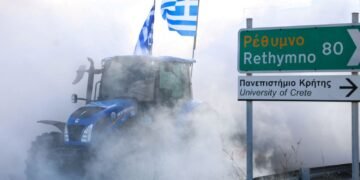
Greek farmers have made headlines this week after blocking access to the international airport on Crete, igniting violent clashes with riot police. The protests, stemming from delays in agricultural subsidy payments, underscore rising tensions within the nation’s farming community.
Why It Matters
This upheaval speaks to broader frustrations faced by farmers across Greece, who are grappling with financial instability and regulatory scrutiny related to European Union subsidies. The situation has escalated as farmers utilize drastic measures, affecting not only transportation but also the agricultural sector’s future viability.
Key Developments
- Farmers staged protests at Nikos Kazantzakis International Airport in Heraklion, leading to flight cancellations.
- Clashes occurred in Chania, resulting in injuries and the use of tear gas by police.
- The protests are a reaction to delays in EU agricultural subsidies after a scandal regarding fraudulent claims.
- Farmers have set up blockades using tractors at various critical transport hubs, affecting traffic nationwide.
- The Greek government has expressed its willingness to negotiate but warned against further disruptions at major transit points.
Full Report
Protesters representing the agricultural community gathered on the tarmac of Crete’s primary airport, causing significant disruption and leading authorities to suspend all flights. Tensions escalated in Chania, where demonstrators clashed with riot police, reportedly injuring two individuals. Local reports indicated that officers resorted to using tear gas to control the situation, as farmers responded by throwing rocks and vandalizing a police vehicle.
These protests emerged following delays in payments of European Union-supported agricultural subsidies. After a scandal involving fraudulent subsidy claims, government authorities began a comprehensive review of subsidy requests, a decision many farmers view as collective punishment. This delay has left numerous farmers burdened with debts, undermining their capacity to prepare for the upcoming planting season.
Additionally, the Greek agricultural sector is currently facing a severe outbreak of goat and sheep pox, necessitating a mass culling of infected livestock. This has exacerbated the already challenging economic environment for farmers across the country.
In a show of frustration, agricultural workers have mobilized thousands of tractors at various border crossings and key highway locations, significantly impacting traffic flow and operations at ports and airports.
Public Order Minister Michalis Chrisochoidis reiterated that the government remains open to dialogue with protest leaders but emphasized a zero-tolerance policy toward interruptions of crucial transit routes. Just days before the airport protest, riot police intervened in another demonstration aimed at blocking a major road near Thessaloniki, further illustrating the farming community’s escalating discontent.
Context & Previous Events
Protests by farmers are not uncommon in Greece, with past events often leading to significant disruptions in transportation across the country. Previous similar blockades have even led to inter-regional isolation, lasting for weeks and showcasing the farmers’ determination as they seek redress and immediate action regarding their financial grievances.






