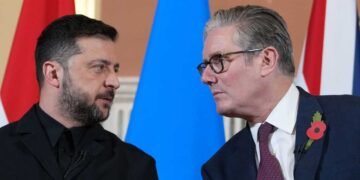























European Leaders Unite in London as Ukraine Faces Uncertainty
LONDON — As Ukrainian President Volodymyr Zelenskyy visits London for discussions with British Prime Minister Keir Starmer, French President Emmanuel Macron, and German Chancellor Friedrich Merz, the unity of European allies comes into sharp focus. This meeting, however, occurs against a backdrop of rising tensions, as Ukraine grapples with wavering support from the Trump administration while Russia intensifies its military actions.
Why It Matters
This meeting signifies Europe’s commitment to uphold Ukraine’s territorial integrity amid ongoing hostilities. However, the uncertainty surrounding U.S. support adds complexity to Zelenskyy’s efforts to secure a robust peace agreement. With Russia’s demands remaining firm, the stakes for Ukraine, Europe, and global security continue to escalate.
Key Developments
- Zelenskyy arrives in London for critical discussions with European leaders.
- The Trump administration proposed a contentious 28-point peace plan perceived as favorable to Russia.
- During a recent call, Zelenskyy engaged U.S. envoys but achieved no significant breakthroughs.
- Russia has ramped up its attacks, launching a series of drone and missile strikes over the weekend.
- Concerns grow over potential U.S. disengagement from support for Ukraine, especially as political figures make comments suggesting a shift in focus.
Full Report
Leaders’ Support
Zelenskyy is expected to receive strong backing from major European leaders, as they collectively affirm their commitment to Ukraine’s sovereignty. The ongoing efforts highlight the notion of "a coalition of the willing," as described by Prime Minister Starmer. This meeting in London follows Zelenskyy’s engagements in Paris and his inaugural state visit to Ireland, where he reiterated calls for continued military and security assistance.
Ongoing Peace Talks
The Trump administration’s recent peace proposal, featuring demands perceived as unacceptable by Ukraine—including territorial concessions and limitations on military alliances—has raised alarm among European officials. Zelenskyy has openly rejected these terms, emphasizing the importance of territorial integrity in any peace negotiations. Despite a recent call with U.S. representatives described as "substantive," Zelenskyy reported minimal progress, which is concerning given Russia’s recent military offensives.
Escalation from Russia
In the lead-up to these diplomatic discussions, Russia has displayed an aggressive posture, launching numerous strikes aimed at Ukraine’s energy infrastructure. Over the weekend, drone and missile assaults resulted in casualties and power outages. This escalation serves as a stark reminder of Russia’s readiness to intensify its military actions, even as diplomatic channels remain stalled.
U.S. Position Under Scrutiny
Concerns loom large regarding the U.S. position, particularly following comments from Donald Trump Jr. suggesting that his father may be willing to withdraw support for Ukraine if a timely agreement with Russia isn’t reached. This adds a layer of uncertainty to Zelenskyy’s strategy, as he navigates the politics of international support.
Context & Previous Events
In recent weeks, European leaders have increasingly emphasized that Ukraine’s security is intertwined with Europe’s stability. European Commission President Ursula von der Leyen has strongly advocated for preserving Ukraine’s territorial integrity. Furthermore, reports emerged that Macron privately warned Zelenskyy of the potential for a U.S. betrayal concerning territorial concessions. The Trump administration’s new national security strategy has further fueled doubts about the reliability of U.S. support for Ukraine and, by extension, Europe.
As discussions proceed, the focus remains on how European leaders can bolster support for Ukraine while addressing concerns about the reliability of their most powerful ally.






