






















Tensions Rise as Japan Accuses China of Threatening Military Actions
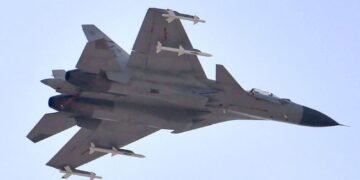
Japan’s defense ministry has accused a Chinese military jet of locking its radar onto Japanese fighter aircraft near Okinawa, describing the incident as a "dangerous act." The Chinese J-15 jet reportedly targeted Japan’s F-15s twice on the same day, raising alarms about military provocations in the region.
Why It Matters
This incident marks a significant escalation in military tensions between Japan and China, with the potential for broader implications for regional security. Japan’s firm stance signals growing concerns over China’s military assertiveness in the East China Sea, particularly as diplomatic relations continue to fray.
Key Developments
- Radar Lock Incident: The Chinese J-15 aircraft locked onto Japanese F-15s intermittently on two occasions—once in the late afternoon and again for about 30 minutes in the evening.
- Origin of Chinese Jet: The J-15 was launched from China’s Liaoning aircraft carrier, which was operating south of the Okinawa islands alongside three missile destroyers.
- Japan’s Response: Japan confirmed there was no breach of its airspace and reported no injuries or damages. However, defense minister Shinjiro Koizumi issued a formal protest to China.
- China’s Rebuttal: A Chinese navy spokesperson dismissed Japan’s allegations, claiming they were inconsistent with the actual events. He stated that a Japanese self-defense force aircraft had disrupted Chinese naval training exercises.
Full Report
Incident Details
The Ministry of Defense of Japan reported that the Chinese J-15 aircraft locked its fire-control radar onto Japanese F-15 fighter jets, a maneuver typically associated with preparations for an engagement. The targeting lasted for approximately three minutes during the afternoon and for around 30 minutes in the evening. Japanese forces scrambled in response to what they viewed as a possible airspace violation by China.
Diplomatic Reactions
In the aftermath, Japan’s defense minister labeled the radar locking as exceeding necessary measures for safe operations. Following the incident, Japan issued a formal protest, demanding China implement strict preventive measures against such actions in the future. This incident occurs amid escalating diplomatic tensions sparked by remarks from Japan’s prime minister regarding Taiwan, further straining relations.
Chinese Position
In contrast, the Chinese navy’s spokesperson asserted that the situation was misrepresented, placing the blame on Japanese aircraft for approaching too closely during a training exercise. The Chinese government has indicated a strong reaction to Japan’s claims and previous comments made by Japanese officials about their military’s potential response to situations involving Taiwan.
Context & Previous Events
Tensions have been mounting between Japan and China in recent months, with diplomatic relations strained particularly after recent remarks by Japan’s Prime Minister Sanae Takaichi. Takaichi suggested that Japan could involve its military should China take action against Taiwan, a self-governing island that China claims as its territory. Following these comments, Chinese Foreign Minister Wang Yi criticized Japan’s statements, saying they crossed a "red line," further complicating efforts to stabilize relations between the two nations.