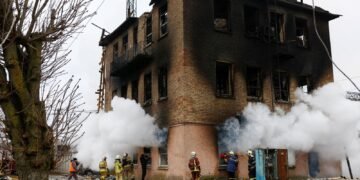























Russia Launches Large-Scale Missile and Drone Assault on Ukraine Amid Ongoing Peace Talks
In a significant escalation of hostilities, Russia has executed a massive missile and drone assault on Ukraine, coinciding with ongoing discussions between U.S. and Ukrainian officials aimed at resolving the conflict. This attack underscores the challenges in achieving a long-term peace agreement, as both sides emphasize the need for Russia to demonstrate a genuine commitment to stability.
Why It Matters
The latest wave of aggression from Russia not only threatens civilian infrastructure but also raises urgent concerns regarding energy security in Ukraine during the winter months. As negotiations continue, the attack highlights the fragility of peace efforts and the ongoing humanitarian crisis facing millions of Ukrainians. The outcome of these talks may hinge on Russia’s actions in the coming days.
Key Developments
- Russia launched 653 drones and 51 missiles across Ukraine, triggering widespread air raid alerts.
- Ukrainian forces successfully intercepted 585 drones and 30 missiles, according to the air force.
- The assault specifically targeted energy infrastructure, with at least eight individuals wounded.
- Ukraine’s Zaporizhzhia nuclear plant temporarily lost all external power during the attack.
- Ukrainian President Volodymyr Zelenskyy condemned the strikes as “meaningless” and highlighted the detrimental impact on civilians.
- In retaliation, Ukraine targeted Russia’s Ryazan Oil Refinery, aiming to disrupt Moscow’s oil revenue.
- Peace talks involving President Zelenskyy, U.S. officials, and leaders from France and Germany continue amid the escalation.
Full Report
Details of the Attack
In a coordinated offensive, Russian forces launched extensive missile and drone strikes aimed at Ukrainian energy facilities. The Ukrainian air force reported that air defense systems successfully shot down the majority of incoming threats, neutralizing 585 drones and 30 missiles. However, the assaults did strike 29 locations, leading to injuries for at least eight individuals, as confirmed by the Minister of Internal Affairs, Ihor Klymenko.
Impact on Energy Infrastructure
The targeting of energy infrastructure has prompted significant concern, especially with Ukraine’s Zaporizhzhia nuclear power plant temporarily losing all external power due to the attacks. The International Atomic Energy Agency noted the critical need for reliable power to cool deactivated reactors and spent fuel, emphasizing the potential risks of a catastrophic incident in the nuclear facility.
Statements from Leadership
President Zelenskyy criticized the Russian strikes as “meaningless” from a military standpoint and expressed concern over their intent to harm Ukrainian civilians. He pointed to the attacks on energy facilities as part of a broader strategy to inflict suffering during a particularly harsh winter season. Zelenskyy called for increased sanctions and sustained international support for Ukraine’s defense systems.
Ukrainian Counteraction
In a retaliatory move, Ukraine targeted the Ryazan Oil Refinery in Russia, reportedly causing significant damage and aiming to cut off Moscow’s oil revenue streams. This action forms part of Ukraine’s broader strategy to thwart Russian military efforts by undermining their economic resources.
Context & Previous Events
The escalation comes on the heels of three days of talks between U.S. and Ukrainian officials, where both parties acknowledged progress on establishing a security framework for post-war Ukraine. They reiterated that any substantial agreement would be contingent on Russia’s willingness to engage sincerely in peace efforts.