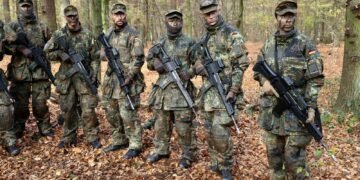























Germany Resumes Voluntary Military Service Amid Controversy
Germany has officially reinstated voluntary military service following the passage of a new law by the Bundestag. This legislation aims to attract young recruits with a more lucrative alternative to military enlistment, while also introducing conditions for conscription if volunteer rates decline.
Why It Matters
The decision to reintroduce voluntary military service marks a significant shift in Germany’s defense policy, reflecting growing concerns over security within Europe. As geopolitical tensions rise, particularly with the ongoing threat from Russia, Germany’s move may significantly influence military recruitment and readiness across the continent.
Key Developments
-
Legislation Passed: The German parliament approved a dual-track military service system that prioritizes voluntary enlistment.
-
Potential Conscription: If volunteer targets are not met, a needs-based conscription can be introduced, necessitating a parliamentary vote and possibly involving random selection of eligible citizens.
-
Eligibility Notification: Starting January, all 18-year-olds in Germany will receive requests to indicate their interest in military service.
-
Mandatory Response for Men: All males born after January 1, 2008, must undergo medical evaluations, a reintroduction not seen since conscription ended in 2011.
-
Recruitment Goals: The legislation sets a target to expand the Bundeswehr, Germany’s armed forces, to 260,000 active soldiers and at least 200,000 reservists by 2035.
-
Government Justification: Defense Minister Boris Pistorius emphasized that "our allies are looking at Germany," positioning it as a leader in European defense initiatives.
- Public Opposition: The new military service law has sparked protests among young people and calls for further action from opposition politicians.
Full Report
Details of the Legislation
The newly passed law introduces a more attractive voluntary military service to draw in potential recruits. The German government anticipates a shortfall in enlistments, which could trigger the reinstatement of conscription. This would require a parliamentary vote and enable random selection among eligible citizens if too many express interest.
Beginning in January, all individuals who turn 18 will receive official notifications to assess their willingness to join. Among this cohort, men will be mandated to respond, and medical evaluations will be phased in to gauge fitness levels for military service.
Government Statements
In discussions surrounding this legislation, Boris Pistorius articulated the importance of a robust military presence, asserting that Germany’s current defense strategy necessitates a significant increase in personnel. With this newfound capability, Pistorius claims Germany is poised to serve as a model for defense frameworks across Europe.
Public Reactions
The decision to reestablish voluntary military service has ignited considerable unrest among the youth, with protests occurring in cities like Berlin. Figures from opposition parties are urging citizens to consider conscientious objection. Desiree Becker, representative of the Left Party, called for a mobilization to resist the revival of conscription.
Context & Previous Events
Germany phased out mandatory military service in 2011, a decision that has remained largely unchallenged until now. This move towards revitalizing military recruitment parallels recent developments in other European nations, such as France, which also introduced military service reforms in response to security threats. French President Emmanuel Macron’s similar initiatives highlight a broader trend among European nations focused on enhancing military readiness amidst growing geopolitical tensions.