






















Putin’s Warm Welcome in New Delhi Marks 23rd India-Russia Summit
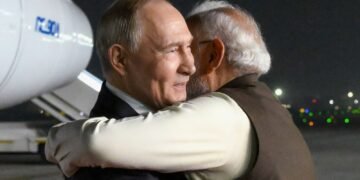
Russian President Vladimir Putin received a ceremonial welcome in New Delhi as he arrived for the 23rd India-Russia summit, a meeting aimed at solidifying ties between the two nations. Breaking with customary protocol, Indian Prime Minister Narendra Modi greeted Putin personally on the tarmac, signaling the importance of this gathering amidst global tensions, particularly stemming from the war in Ukraine.
Why It Matters
This summit comes at a crucial time for both nations as they navigate international pressures and relationships. The discussions are expected to highlight trade and defense agreements while seeking to bolster their cooperation against U.S.-imposed sanctions. The evolving dynamics of the India-Russia partnership could have significant geopolitical implications, especially concerning energy security and military collaboration.
Key Developments
- Putin’s visit underscores the longstanding partnership between India and Russia, with a focus on enhancing defense and trade.
- The leaders shared a private dinner, marking a reciprocal gesture after Modi’s visit to Putin last year.
- A key military agreement, the Reciprocal Exchange of Logistic Support (RELOS), was ratified, enhancing military logistics between the two countries.
- Discussions emphasized the importance of peace efforts concerning the ongoing conflict in Ukraine.
- India has significantly increased its crude oil imports from Russia, amid criticism from the U.S. regarding energy ties.
Full Report
Ceremonial Welcome and Warm Relations
Upon his arrival, Putin was met with a red carpet reception, indicating the significance of the summit. Modi welcomed him with a handshake and a hug, emphasizing their friendship. This gathering aims to deepen strategic collaboration in defense, civil nuclear, oil, and trade sectors.
Putin’s delegation included business leaders, signaling that enhancing trade is a top priority. The current trade balance heavily favors Russia, with Indian exports amounting to less than $5 billion, compared to nearly $69 billion in trade volume.
Strategic Agreements and Military Cooperation
A vital aspect of the summit was the ratification by Russia’s State Duma of the RELOS agreement. This pact streamlines military logistics, enabling the easier exchange of military assets between the two countries. It also offers India access to Russian naval ports, bolstering strategic autonomy.
Modi expressed India’s commitment to peace, asserting that the nation stands firmly on the side of peaceful resolution. Both leaders affirmed their desire to strengthen relations across various sectors, including military and artificial intelligence.
Energy Imports and Global Pressures
India’s increased imports of Russian oil have heightened scrutiny from the United States. As of 2024-25, India sourced almost 40% of its crude oil from Russia, up from just 2% prior to the Ukraine conflict. While the U.S. has imposed tariffs and criticized these transactions, India maintains that its energy security for 1.4 billion people is the primary concern.
During the talks, Putin pointed out a double standard in U.S. energy policies, challenging why India should not benefit similarly from Russian energy as the U.S. does.
Context & Previous Events
The India-Russia relationship has historical roots dating back to the Cold War, during which India was aligned with the Soviet Union. This historical support has influenced India’s diplomatic posture, particularly its abstentions regarding UN resolutions on conflicts involving Russia.
In recent years, while Russia has been India’s largest arms supplier, the Modi government has gradually shifted towards Western defense suppliers, reducing reliance on Russian military hardware from 72% to just 36% in recent years, indicating a complex balancing act in India’s foreign relations.
The summit represents an effort to reinforce the long-standing ties amidst evolving geopolitical landscapes and economic challenges.