






















Israeli Air Strikes Target Southern Lebanon Following Historic Talks
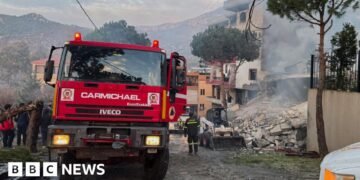
The Israeli military has launched a new series of air strikes in southern Lebanon, executing the attacks less than a day after both nations engaged in their first direct negotiations in decades. This escalation has heightened concerns regarding regional stability in a context already strained by decades of conflict.
Why It Matters
The latest military action underscores the fragile situation along the Israel-Lebanon border, where tensions have persisted despite a ceasefire agreement. Israel’s ongoing military operations are largely viewed as a response to Hezbollah’s military infrastructure activities, raising questions about the effectiveness of diplomatic efforts aimed at fostering stability in the region.
Key Developments
- Israeli air strikes targeted towns in southern Lebanon, including Mjadel and Jbaa, with evacuations ordered for nearby residents.
- The Israeli military claimed these sites were linked to ceasefire violations and Hezbollah’s weapons caches.
- No casualties have been reported from the air strikes.
- Israeli Prime Minister Benjamin Netanyahu emphasized that disarming Hezbollah remains a prerequisite for any economic cooperation with Lebanon.
- Lebanese Prime Minister Nawaf Salam asserted that Lebanon is “far” from normalizing relations with Israel.
- The strikes came after a meeting in Naqoura intended to defuse tensions, where both sides expressed willingness for future cooperation.
Full Report
Escalation Following Diplomatic Initiatives
Less than 24 hours after historic peace talks in Naqoura, Israeli forces conducted air strikes in southern Lebanese towns, prompting calls for evacuation in areas alleged to host weapons warehouses belonging to Hezbollah. While no casualties have been reported, the strikes mark a continuation of ongoing military operations in the region.
Israeli Position
An Israeli military spokesperson stated that the targeted sites breached the ceasefire agreement and reaffirmed Israel’s commitment to act against any perceived threats. This follows a pattern of air strikes that have been conducted nearly daily since the ceasefire went into effect in November 2024, which concluded a year-long conflict.
Reactions from Leadership
Israeli diplomatic efforts have been underscored by Netanyahu’s office, which noted a constructive atmosphere during the talks and the necessity of disarming Hezbollah for any economic engagements. Meanwhile, Lebanese leaders have reacted cautiously, with Prime Minister Salam highlighting the need for immediate concerns such as the cessation of hostilities and the release of Lebanese detainees.
International Oversight
The recent military actions coincide with a UN Security Council delegation’s visit to Lebanon aimed at reviewing the implementation of the ceasefire. Lebanese officials have expressed openness to the deployment of French and U.S. troops to assist in overseeing Hezbollah’s disarmament as part of broader negotiations.
Context & Previous Events
October 2024 marked the start of a ceasefire following 13 months of intense conflict in the region. The historic July talks brokered by the United States and France aimed to establish a framework for withdrawal of Israeli forces and the disarmament of Hezbollah fighters from southern Lebanon, yet resistance from the group has complicated the implementation of these plans.