






















Putin’s Visit to India: A Strategic Meeting Amid Global Tensions
Russian President Vladimir Putin’s recent two-day visit to India marks a significant step in the long-standing relationship between the two nations. Welcomed warmly by Prime Minister Narendra Modi, this summit comes at a time of heightened geopolitical tensions, particularly regarding India’s increasing oil purchases from Russia amid U.S. pressure.
Why It Matters
The significance of this visit lies in its potential impact on global energy markets, defense partnerships, and India’s strategic autonomy. As India navigates complex relationships with both Russia and the West, this meeting will signal how it seeks to balance its geopolitical interests, especially in light of the ongoing war in Ukraine.
Key Developments
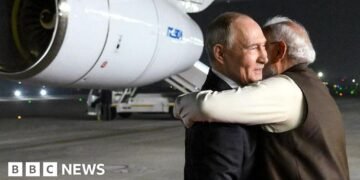
- Warm Reception: Modi embraced Putin at the airport, emphasizing their enduring partnership amid strained global relations.
- Economic Agreements: A series of trade deals, particularly in oil and defense, are expected to be signed during the visit.
- Oil Dependence: India’s crude oil imports from Russia have surged to 35%, a significant increase from 2.5% before the Ukraine war.
- Defense Sales: India plans to procure advanced Russian military technology, including fighter jets and air defense systems.
- Geopolitical Messaging: The summit underscores Russia’s efforts to showcase its allies in the face of Western isolation.
Full Report
Strengthening Ties
Putin’s visit comes at a critical juncture for India as it attempts to assert its strategic autonomy on the global stage. Historically, India and Russia have maintained close ties, dating back to the Soviet era. Despite external pressures, Modi has consistently advocated for dialogue with Russia over condemnation regarding the Ukraine conflict.
This time, however, India’s relationship with the U.S. has cooled, particularly after the Trump administration imposed tariffs on Indian goods as a repercussion for buying Russian oil. As a result, the meeting seeks to reinforce India-Russia ties while balancing ongoing trade discussions with Western allies.
Military Collaboration
Military cooperation remains a cornerstone of the India-Russia relationship. Reports suggest India is looking to acquire state-of-the-art Russian defense systems, including upgraded S-500 missile systems and the fifth-generation Su-57 fighter jet. However, increasing sanctions on Russia have raised concerns about delivery timelines and availability of critical components.
Despite reducing its reliance on Russian arms in recent years, a significant portion of India’s armed forces still relies on Russian technology, underscoring the relationship’s importance. Modi is expected to seek assurances regarding military supply timelines from Putin during this visit.
Trade Imbalance
Currently, India’s trade with Russia has heavily favored Moscow, largely due to oil imports. While bilateral trade reached $68.72 billion recently, Modi aims to expand India’s market presence in Russia beyond just oil and defense. However, Indian exports in consumer goods remain minimal, highlighting a need to diversify trade relations as the two nations navigate a shifting geopolitical landscape.
Context & Previous Events
India has been a close ally of Russia since the Cold War, a relationship that has persisted through changing global dynamics. Before the Ukraine crisis, Russian oil made up a small fraction of India’s imports. However, the ongoing conflict and resulting Western sanctions have led India to capitalize on discounted Russian oil, altering this historical trade balance. The U.S.’s renewed focus on India through strategic initiatives has introduced complexity into the relationship, making this summit particularly salient as India seeks to assert its independence while managing alliances.