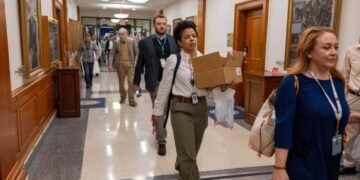























Pentagon Press Policy Sparks Legal Battle with Media Outlets
Members of the Pentagon press corps are standing against the Defense Department’s new media policy, culminating in a significant lawsuit from The New York Times. The policy restricts journalists from accessing information unless explicitly authorized, raising concerns over press freedom and transparency.
Why It Matters
The ongoing confrontation between the Pentagon and mainstream media highlights critical issues surrounding free press rights and government accountability. This legal dispute underscores the pressures faced by journalists in obtaining information essential for public knowledge, particularly concerning military actions and national security.
Key Developments
- The New York Times has filed a lawsuit against Defense Secretary Pete Hegseth, challenging a newly instituted Pentagon media policy.
- The policy, introduced in September, prohibits journalists from reporting unclassified information without explicit approval from Defense officials.
- Major news organizations, including NPR, have returned their press credentials in protest.
- The lawsuit argues that the policy infringes upon First Amendment rights and denies reporters due process regarding their press credentials.
- Newly welcomed press members include outlets with clear pro-Trump affiliations, amid claims of declining trust in mainstream media.
Full Report
Legal Action Initiated
On Thursday, The New York Times took legal action against Secretary Pete Hegseth and the Defense Department, contending that the restrictive media policy introduced at the Pentagon constrains journalists’ ability to report independently. The suit argues that the policy violates constitutional protections for free speech and press freedom. According to the Times, such a framework effectively compels reporters to rely solely on government sources for military news and could unjustly permit punitive measures against journalists who fail to comply.
Surrendering Credentials
In light of the new policy requiring news organizations to pledge non-disclosure of unauthorized information, several prominent outlets, including NPR, decided to relinquish their press credentials. Despite this, these organizations continue to report diligently on military operations, including U.S. engagements in sensitive regions. Investigations have recently revealed that Hegseth’s private communications about airstrikes could have endangered American troops, raising further complications concerning the transparency of military operations.
Controversial Policy Changes
Defense Secretary Hegseth has implemented various changes affecting press access at the Pentagon, including restrictions that limit reporters’ mobility without pre-approved escorts. These measures mark a shift from longstanding practices under both Democratic and Republican administrations. Hegseth has publicly stated, “The ‘press’ does not run the Pentagon — the people do,” reflecting a stark shift in how the military engages with the media.
Inclusion of New Media Entities
In an apparent pivot, the Pentagon has welcomed new press members aligned with pro-Trump ideologies. Pentagon Press Secretary Kingsley Wilson acknowledged this new cadre of reporters, juxtaposing them against traditional media outlets that have chosen to forgo credentials. These changes have raised eyebrows, particularly regarding the role of independent journalism in monitoring government actions effectively.
Context & Previous Events
This lawsuit recalls past tensions between the government and journalists, specifically referencing incidents from the previous Trump administration, where press passes for reporters were revoked under controversial circumstances. Legal precedents from those events might influence the current case as journalists and advocacy groups defend the imperative of a free press in scrutinizing governmental actions. Recent changes have drawn comparisons to prior patterns of media opposition observed during the second Trump administration.
As the legal proceedings evolve, the ramifications for both press access and governmental accountability remain to be seen in this critical First Amendment battle.






