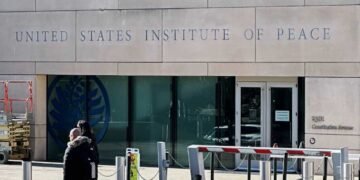























Trump Administration Renames U.S. Institute of Peace Amid Legal Turmoil
In a controversial move, the Trump administration has officially renamed the U.S. Institute of Peace (USIP) to the Donald J. Trump Institute of Peace. This decision comes amidst an ongoing legal dispute over the control of the institute, which has been a focal point for peace initiatives since its establishment by Congress in the 1980s.
Why It Matters
The renaming of USIP marks a significant development in the contentious dialogue about governmental authority and the independence of federal institutions. As the Trump administration continues navigating legal challenges regarding the institute’s management, this act raises questions about the implications for nonprofit organizations affiliated with the federal government and their autonomy.
Key Developments
- Renaming Announcement: The State Department announced the renaming to the Donald J. Trump Institute of Peace to celebrate Trump’s purported achievements in diplomacy.
- Legal Disputes: The institute is embroiled in a protracted legal battle over its control, with ongoing appeals in federal court.
- Staffing Changes: Following the administration’s intervention, the institute’s leadership and staff were removed from their positions.
- Peace Agreement: The institute is set to host a peace agreement signing involving leaders from Congo and Rwanda, which underscores its original mission.
Full Report
As of December 3, 2025, the headquarters of the U.S. Institute of Peace displays a new name, reflecting ongoing disputes within the Trump administration. The renaming ceremony occurred alongside the release of statements from White House officials asserting that under Trump’s leadership, the organization transitioned from a perceived ineffective entity to one that symbolizes powerful governance.
A statement from Anna Kelly, a spokesperson for the White House, criticized the previous operations of USIP, describing it as "bloated" and ineffective. The new name, according to Kelly, will serve as a "powerful reminder of what strong leadership can accomplish for global stability."
Despite the administration’s claims of effectiveness, the legal landscape tells a different story. George Foote, representing the former leadership of the institute, decried the renaming as "an insult to injury," highlighting a federal court decision that ruled the government’s actions to take control of USIP were illegal. He noted that the ongoing court appeals allow the administration to retain control over the building, even as the legal validity of that control remains disputed.
The ongoing legal battle has seen the institute’s ownership switch hands multiple times since March, reflecting the instability of its operational status. The shared understanding among the institute’s original advocates is that USIP was intended to function independently, without direct presidential oversight.
In an unexpected twist, the USIP is expected to serve as the venue for a peace agreement signing between Congo’s President Felix Tshisekedi and Rwanda’s President Paul Kagame, with high-profile attendees from several African nations. In statements preceding the event, Trump’s involvement in overseeing this peace initiative aligns with his stated ambition of enhancing his global diplomatic image.
Despite the institute’s official renaming and the political rhetoric accompanying it, its website retained the prior name late Wednesday, underscoring the discord between the administration’s actions and public representation.
Context & Previous Events
The U.S. Institute of Peace was established by Congress in the 1980s and signed into law by President Ronald Reagan in 1985. Recognized as an independent nonprofit think tank, USIP’s mandate has been to foster peace and resolve conflicts globally. Its operations extended across multiple conflict zones until the Department of Government Efficiency intervened this year, leading to significant staffing changes and the current legal turmoil.






