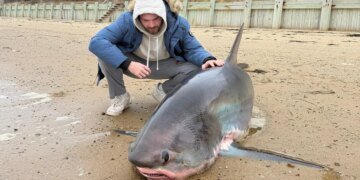























A 14-Foot Thresher Shark Stranded in Wellfleet, Massachusetts, Dies
A 14-foot thresher shark has died after becoming stranded in shallow waters off the Massachusetts coast. The New England Coastal Wildlife Alliance (NECWA) responded to the scene but arrived only to find the shark had already succumbed before they could intervene.
Why It Matters
The incident highlights the increasing risks marine wildlife face due to changing environmental conditions and migration behaviors. Strandings such as this one raise important questions about the health of marine ecosystems and the challenges animals encounter as they attempt to navigate their habitats.
Key Developments
- The shark was first sighted alive at Mayo Beach in Wellfleet, Massachusetts, but died shortly before rescue efforts began.
- NECWA received multiple reports about the stranded shark and dispatched a team to help.
- Upon arrival, the organization noted visible injuries on the animal, including track-like marks on its body.
- The water temperature was below 50 degrees, contributing to the shark’s demise as thresher sharks are sensitive to cold exposure.
- The organization’s president indicated that strandings of thresher sharks become more common during the cold months on Cape Cod.
Full Report
Incident Overview
The New England Coastal Wildlife Alliance reported that the 14-foot thresher shark was discovered stranded on Tuesday at Mayo Beach. Although it was initially seen alive, it unfortunately died just before help arrived. Photos taken at the scene depicted the shark, characterized by its long, whip-like tail, lying on the shore with evident signs of injury.
Response from Wildlife Officials
NECWA responded swiftly after receiving numerous notifications about the stranded shark. However, by the time the team reached the site, the animal had already passed. Marine Biologist Krill Carson, who is also the president of NECWA, explained that the shark was in poor health upon discovery and a necropsy was performed to further understand the circumstances surrounding its death.
Stranding Patterns
According to NECWA, thresher shark strandings are particularly prevalent during the colder months as these animals make their migration southward. Carson noted that the majority of stranded sharks they encounter are male. She emphasized the challenges marine animals face when trapped in colder waters, stating, “If they stay too long, they become cold-stunned or cold-shocked and die.”
Environmental Factors
The water temperature at the time of the stranding was below 50 degrees, a significant factor contributing to the shark’s vulnerability to cold exposure. Carson mentioned that this environmental condition is detrimental for marine species that are unable to withstand prolonged cold temperatures.
Context & Previous Events
The organization noted that a handful of thresher sharks strand each season while trying to navigate away from Cape Cod. This incident serves as a reminder of the broader challenges marine wildlife face during migration periods and the effects of changing water temperatures.






