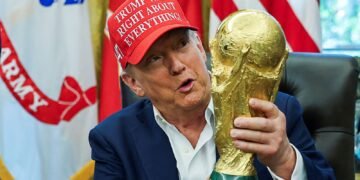























Trump Administration Prioritizes Security for 2026 World Cup Amid Controversies
The Trump administration is making safety its top priority for the upcoming 2026 World Cup, set to take place across the U.S., Canada, and Mexico. Andrew Giuliani, leading the White House World Cup task force, emphasized the president’s commitment to ensuring a secure environment for attendees, while dismissing criticisms regarding human rights concerns associated with the tournament.
Why It Matters
As preparations ramp up for the first-ever World Cup hosted by three nations, the emphasis on security reflects heightened concerns over potential threats to fans and athletes. The event not only showcases global talent but also serves as a significant moment in American sports history, coinciding with the nation’s 250th anniversary. Ensuring safety is crucial, as it could shape public perception of the U.S. on the international stage.
Key Developments
- Andrew Giuliani stated that President Trump "never rules anything out" regarding safety measures for the World Cup.
- Giuliani found it "absurd" for activists to claim that human rights are at risk during the tournament.
- Cities like Boston, Seattle, and San Francisco are under scrutiny, with Trump suggesting he may relocate matches if safety is compromised.
- The administration is monitoring immigration laws concerning fans at the event, with potential involvement of Immigration and Customs Enforcement (ICE).
- Over $500 million is allocated for security measures, including counter-drone efforts for major events.
Full Report
Focus on Safety
Giuliani expressed the administration’s intention to create a "welcoming" atmosphere for the World Cup. "Safety is key," he asserted, highlighting President Trump’s concerns about security for both Americans and international visitors. The president’s focus on ensuring that host cities are adequately equipped for the event was clear, as he urged local officials to prioritize safety, irrespective of their political affiliations.
Controversies Surrounding the Event
Activists have raised alarms regarding potential human rights issues connected to the tournament, which Giuliani dismissed. He pointed to the president’s achievements in fostering peace in the Middle East and described allegations of human rights abuses at the World Cup as misguided.
The concerns arise following a news conference held by Human Rights Watch, where they argued that the tournament might be politicized, putting attendees at risk. Responding to these claims, Giuliani stated, “That sounds like an absurd allegation,” suggesting that the objective should be to enjoy the event rather than dwell on unfounded accusations.
Security Preparedness
Giuliani confirmed that the administration is cognizant of the security challenges posed by hosting a large event across multiple nations. While he refrained from disclosing specific intelligence protocols, he acknowledged that the World Cup has always been a target for potential threats.
The task force is investing in advanced security measures to mitigate risks, such as unauthorized drone activity and vehicle attacks. Giuliani assured that the primary focus remains on ensuring an enjoyable and safe experience for fans.
International Collaboration
Despite the political tensions between the U.S. and its North American neighbors, Giuliani expressed optimism about collaboration for the World Cup. He noted that differing political views should not hinder joint efforts to ensure the event is a success. “Our three countries are working together to make this World Cup a great success,” he stated.
Visa Protocols
To facilitate attendance, a fast-track visa process will be implemented for fans, although current travel restrictions affect individuals from Haiti and Iran. Giuliani emphasized that visa decisions will prioritize national security.
Context & Previous Events
The 2026 World Cup will be the first to feature an expanded format of 48 teams and will be held in multiple host countries. Trump’s administration has frequently highlighted national security as a critical component of its policy agenda, especially regarding large international events like this. The collaboration with Canada and Mexico marks a significant step in sports diplomacy, despite preceding political disagreements over issues such as trade and immigration.