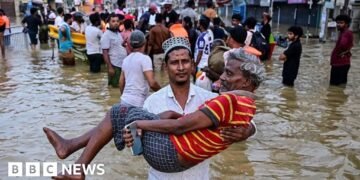























Sri Lanka Faces Catastrophic Flooding, Community Rallies to Aid Victims
Sri Lanka is grappling with devastating flooding after Cyclone Ditwah struck the nation, leading to over 460 fatalities and displacing millions. With significant portions of communities cut off from essential supplies, local volunteers are stepping up to address urgent needs.
Why It Matters
This disaster highlights the vulnerability of regions to extreme weather due to climate change, as Sri Lanka has endured a series of hardships in recent years. The nation’s response to this crisis could serve as a model for community resilience and collective action during emergencies, while also placing a spotlight on governance challenges amidst the calamity.
Key Developments
- Death Toll and Damage: The flooding has claimed more than 460 lives, with many still missing and around 30,000 homes damaged.
- State of Emergency: President Anura Kumara Dissanayake declared a state of emergency as over one million residents have been affected.
- Volunteerism: Community members, including those who previously protested against government actions, are actively providing food and assistance to victims.
- Military Involvement: Sri Lanka’s military has been mobilized for rescue operations, utilizing helicopters to reach stranded individuals.
- Online Initiatives: Social media campaigns are coordinating donations and directing aid to affected locations.
Full Report
Community Response
In Colombo, actor and musician GK Reginold is navigating the flooded suburbs via a motorized fishing boat to deliver food and water to those in dire need. He noted that some families have gone days without aid, emphasizing the urgency of the situation. "The main reason why I wanted to do this is to at least help them to have one meal," Reginold remarked, showcasing the spirit of volunteerism that has emerged.
Community leaders like Sasindu Sahan Tharaka are coordinating relief efforts through community kitchens, offering support based on previous experiences from similar disasters. "We reactivated the group as soon as we heard what was happening last Thursday," he stated. Volunteers are taking shifts and even leaving their jobs to ensure that food reaches those affected.
Digital Platforms for Aid
Social media has become a crucial tool in mobilizing support, as users have created databases to streamline donations and volunteer efforts. Several private companies and local media outlets are also organizing donation drives to collect essential items for those in need.
Political Context
Criticism of government preparedness has surfaced, with opposition politicians alleging that warnings were ignored, exacerbating the disaster’s impact. In response to the growing frustration, President Dissanayake has urged his fellow citizens to unite despite political divisions in order to assist in recovery efforts. In parliament, opposition lawmakers staged a walkout, accusing the ruling party of limiting discussions on disaster management.
Despite political tensions, the community is rallying together, demonstrating a shared dedication to helping fellow citizens in crisis. Tharaka expressed the sentiment that, “The joy of helping someone else to save lives makes that tiredness fade,” emphasizing the resilience and compassion within these neighborhoods.
Context & Previous Events
This catastrophic event follows a history of political and economic turmoil in Sri Lanka, including the major protests in 2022 against former president Gotabaya Rajapaksa. Those protests arose from an acute economic crisis causing widespread shortages of essential goods. The activism from those times has now transitioned into a concerted effort for disaster relief, showcasing a shift in community focus towards support and solidarity during this recent natural calamity.