






















Mortuary Workers Exposed to Toxic Levels of Formaldehyde After Air India Crash
A recent coroner’s report has revealed alarming levels of toxic substances in a London mortuary, affecting workers who dealt with bodies repatriated after the devastating Air India plane crash. The crash, which occurred in June and resulted in the deaths of 241 individuals, has now raised serious concerns about the health risks faced by mortuary staff.
Why It Matters
This incident underscores critical health and safety concerns within mortuaries, particularly regarding the handling of preserved bodies. The high concentrations of formaldehyde and the presence of other toxic gases pose serious risks not only to workers but also to public health, sparking the need for increased awareness and stricter safety protocols in the handling of repatriated remains.
Key Developments
- A coroner’s report indicated that bodies repatriated from India were wrapped in coffins saturated with formalin, leading to dangerously high levels of exposure for mortuary workers.
- Formaldehyde exposure can cause severe respiratory issues and long-term exposure is linked to cancer, according to the UK Health Security Agency.
- The report noted the presence of hazardous levels of carbon monoxide and cyanide during the handling of these remains.
- Senior coroner Fiona J Wilcox emphasized the need for better preparation and monitoring in mortuaries to protect staff.
- The report has been forwarded to the Department of Health and Social Care and the Ministry of Housing, Communities and Local Government, urging for immediate action to prevent potential fatalities.
Full Report
Toxic Exposure Risks
The coroner’s findings revealed that the bodies repatriated to Westminster Public Mortuary were subjected to high concentrations of formalin, exceeding safe handling protocols. This chemical compound, commonly used for preservation, created an unexpected chemical hazard when mortuary employees opened the coffins.
The report highlighted that many workers involved appeared unaware of the dangers posed by formalin, leading to serious health concerns. Carbon monoxide and cyanide exposure were detected at dangerous levels during the handling of the deceased, further complicating the safety landscape within the mortuary environment.
Coroner’s Findings
Fiona J Wilcox, the senior coroner for inner west London, expressed concern over the lack of awareness and monitoring for toxic exposure in mortuaries. According to her statement, “There is an underappreciation across mortuaries of the dangers posed by formalin to the health of all mortuary users.”
The report called attention to the need for environmental monitoring in both public and hospital mortuaries, particularly for bodies preserved in formalin. Coroner Wilcox stated that without proper monitoring and resources, mortuary workers are exposed to significant health risks.
Context & Previous Events
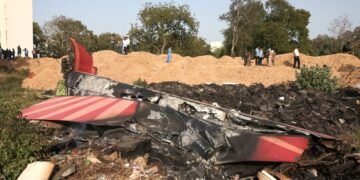
The Air India Flight 171 crash occurred shortly after takeoff from Ahmedabad, India, in June. The tragedy killed 241 people on board as well as 19 additional individuals on the ground, leaving only one survivor. Following the crash, the repatriation efforts led to increased scrutiny regarding the health and safety practices within mortuaries, leading to the coroner’s investigation.
As officials from health and social care agencies review the findings and recommendations, the urgency for action is paramount to safeguard those who handle the remains of the deceased.