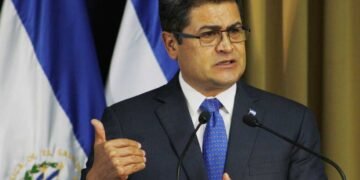























Trump Grants Pardon to Former Honduran President Juan Orlando Hernández
A striking political move comes as President Donald Trump has officially pardoned former Honduran President Juan Orlando Hernández, a figure implicated in severe drug-trafficking operations targeting the United States. This act raises significant questions about the administration’s stance on narcotrafficking, particularly in light of ongoing military campaigns against drug-related violence emanating from Venezuela.
Why It Matters
Hernández’s pardon underscores a complex political narrative, as it highlights potential contradictions in the Trump administration’s drug policy. Critics argue that the release of a leader associated with major drug trafficking diminishes the credibility of the U.S. government’s commitment to countering drug-related offenses. The implications of such a pardon may also influence U.S.-Honduran relations and the broader fight against narcotics in the region.
Key Developments
- Trump pardoned Hernández despite his 45-year sentence for conspiracy to import cocaine into the U.S.
- The White House confirmed the pardon, while the Federal Bureau of Prisons announced Hernández’s release.
- Sen. Tim Kaine described the pardon as "shocking," questioning the administration’s priorities regarding drug trafficking.
- Hernández’s relationship with Trump includes support for moving the Honduran embassy in Israel to Jerusalem during his presidency.
- Former Trump adviser Roger Stone advocated for Hernández’s release, claiming wrongful conviction.
Full Report
Political Backdrop
Former President Hernández was sentenced in 2021 for his role in facilitating the importation of significant quantities of cocaine into the U.S. through corrupt dealings while in office. With ties to some of the most notorious drug-trafficking organizations, Hernández allegedly profited millions of dollars from narcotics sales. His presidency was characterized by accusations of enabling a narco-state environment in Honduras, marked by systemic violence and corruption.
Reaction to the Pardon
Critics have voiced their disapproval, particularly highlighting the contradictions in the Trump administration’s approach to narcotics. Senator Kaine specifically criticized the pardon during an appearance on CBS’ ‘Face the Nation,’ questioning Trump’s commitment to combatting drug trafficking. He described Hernández as "the leader of one of the largest criminal enterprises" ever convicted in U.S. courts.
Hernández’s administration briefly overlapped with Trump’s first term, during which time he garnered support from the U.S. government by aligning with key American policies, including the embassy move in Israel.
Support from Allies
Trump has publicly defended the pardoned former leader, suggesting that he was treated unjustly. Roger Stone, a longstanding political ally of Trump, lobbied for Hernández’s release, sharing on his radio platform that Hernández argued his conviction was the result of political maneuvering from the Biden administration.
Context & Previous Events
Hernández’s legal troubles unfolded amid broader accusations of narco-politics in Honduras, where he has maintained his innocence throughout his conviction. He was serving his sentence at a facility in West Virginia while appealing the guilty verdict.
Trump’s history of pardoning individuals connected to his political base is not new, as he has previously released several allies and associates, resulting in scrutiny over the motives behind such decisions. This latest action raises renewed questions about the ethical implications of presidential pardons and their impact on public trust in governance.






