






















Bulgaria Abandons Controversial Budget Plan Amid Massive Protests
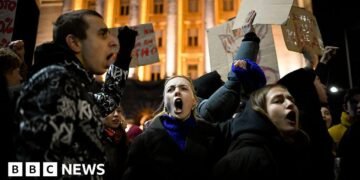
Bulgarian authorities announced the withdrawal of a contentious budget proposal following unprecedented nationwide protests on Monday. Tens of thousands rallied against the draft budget, citing concerns over government corruption and increased taxation, marking one of the largest demonstrations in Sofia in years.
Why It Matters
The decision to abandon the budget proposal reflects widespread public discontent in Bulgaria, a country grappling with ongoing issues of corruption and political instability. With its transition to the eurozone imminent, the government’s fiscal policy decisions carry significant implications for economic stability and public trust.
Key Developments
- The Bulgarian government announced it would withdraw the proposed budget plan after massive protests erupted across the country, particularly in Sofia.
- Public dissatisfaction was primarily driven by issues related to increased social security contributions and tax hikes on dividends aimed at financing higher state spending.
- Significant unrest occurred in Sofia, where some protesters vandalized political party offices, resulting in over 70 arrests.
- Bulgarian President Rumen Radev condemned the violence, labeling it as provocations from corrupt entities and reiterated calls for the government’s resignation and early elections.
- Prime Minister Rosen Zhelyazkov, who heads a minority coalition, acknowledged the necessity for broader consultations before advancing any new budget proposals.
Full Report
Nationwide Protests
Tens of thousands of people participated in demonstrations against the proposed budget in cities including Sofia, Plovdiv, Varna, Burgas, and Blagoevgrad. Protesters rallied outside the parliament, some carrying signs demanding a change in leadership. Many voiced their frustration over persistent government corruption, with sentiments expressed by individuals like Ventsislava Vasileva, a 21-year-old student, emphasizing the desire for a future free from corruption.
Clashes erupted between some masked protesters and police, leading to significant confrontations where authorities in riot gear faced vandalism and arson. As a result, police detained more than 70 individuals accused of inciting violence against political offices.
Government Response
In light of the unrest, President Radev called for an end to the violence, asserting that it was provoked by corrupt elements. He emphasized the need for law and order, stating that the Bulgarian populace signaled their disapproval of the current government.
Prime Minister Zhelyazkov later confirmed the government’s decision to withdraw the budget draft and engage in new consultations with opposition parties and stakeholders. Critics, however, deemed this move insufficient, urging the administration to resign entirely.
Context & Previous Events
The protests marked the continuation of a series of demonstrations against government corruption that have been frequent in Bulgaria since 2020. The previous coalition led by the Gerb party collapsed following similar protests, and the current administration was formed by Zhelyazkov after the October 2024 elections, which yielded no clear majority.
As Bulgaria prepares to adopt the euro beginning January 1, 2026, public opinion remains divided on the potential economic implications of this transition. Concerns about inflation and fiscal policy persist in a nation struggling with its status as one of the EU’s poorer countries.
In summary, the Bulgarian government’s decision to abandon the proposed budget in response to widespread protests underscores the deep-seated issues of public discontent and the call for reform amid a changing economic landscape.