






















Sudan’s Rapid Support Forces Capture Key Transport Junction Amid Ongoing Conflict
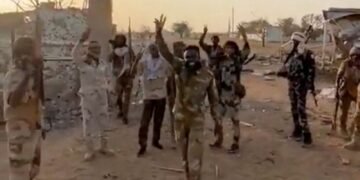
Sudan’s paramilitary Rapid Support Forces (RSF) have announced the capture of Babanusa, a significant transport junction in West Kordofan state. This development follows the RSF’s seizure of Al Fashir, the capital of North Darfur, just a month prior, marking a troubling escalation in the conflict between the RSF and the Sudanese Armed Forces (SAF).
Why It Matters
The RSF’s advances in key territorial locations underscore the deteriorating situation in Sudan, where a civil war has already displaced approximately 12 million individuals and resulted in significant casualties, with estimates suggesting at least 40,000 deaths. These developments raise grave concerns for humanitarian conditions as the RSF’s actions are bringing international scrutiny and allegations of genocide against the group.
Key Developments
- The RSF claims to have repelled a surprise attack from the Sudanese army while capturing Babanusa, asserting it as a violation of a humanitarian truce.
- The military group described the capture as a "liberation" of the city, which has now become a major battleground.
- About a month earlier, the SAF vacated military positions in Al Fashir, allowing the RSF to take control with little resistance.
- According to the World Health Organization, the ongoing conflict has led to the displacement of millions and a staggering death toll; however, some humanitarian organizations warn that the real numbers could be much higher.
- Tom Fletcher, the UN’s under-secretary-general for humanitarian affairs, characterized the situation in Sudan as "horrifying" and the "epicenter of suffering in the world."
Full Report
RSF Statement on Babanusa Capture
The RSF released a statement detailing the circumstances surrounding their capture of Babanusa, framing the hostilities as a necessary response to an attack by the Sudanese army. They described the action as a culmination of efforts to establish military control across several regions of Sudan, quickly amplifying tensions in the already volatile environment.
Escalation of Conflict
This capture follows the RSF’s earlier annexation of Al Fashir, where they faced minimal opposition from the SAF. The RSF’s increasing territorial conquests indicate a significant power shift in the region, contradicting earlier claims of a humanitarian ceasefire proposed by the Quartet of nations: the United States, the United Arab Emirates, Egypt, and Saudi Arabia.
Despite initially accepting the truce plan, the RSF resumed hostilities almost immediately with drone strikes targeting SAF positions, highlighting their commitment to military objectives over diplomatic resolutions.
Context & Previous Events
The conflict between the RSF and the Sudanese army began in April 2023 in Khartoum and has since spread widely throughout the country. The RSF’s control over strategic locations like Al Fashir and now Babanusa has raised alarms about the potential for further humanitarian crises and the escalating nature of violence in Sudan. Previous allegations by the administration of former U.S. President Joe Biden have labeled the RSF’s actions as genocidal, placing heightened pressure on international diplomatic efforts to resolve the ongoing conflict.






