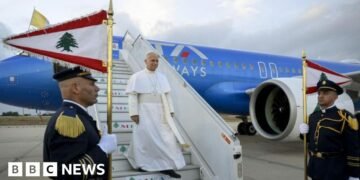























Pope Leo XIV Touches Down in Beirut Amidst Regional Tumult
The arrival of Pope Leo XIV in Beirut marks a significant moment as he undertakes his first foreign trip amid ongoing tensions following recent Israeli air strikes on the Lebanese capital. His visit not only emphasizes Lebanon’s complex political landscape but also sets the stage for the Pope’s broader role as a spiritual leader and mediator in a region rife with conflict.
Why It Matters
Pope Leo’s decision to prioritize Lebanon during this challenging period aims to deliver a message of peace and hope to a country grappling with governance issues and ongoing strife. His visit serves as a reminder of the Church’s commitment to promoting dialogue among various faiths, offering a form of encouragement and unity to Lebanon’s diverse population.
Key Developments
- Arrival and Symbolism: Pope Leo XIV landed in Beirut a week after Israeli air strikes, reinforcing his role as a messenger of peace in a region historically marked by conflict.
- Meeting with Leaders: His first act in Lebanon was to gather with key political figures, urging them to prioritize service to their constituents.
- Inclusive Welcomes: The Pope’s presence has received warm receptions across different religious communities, including greetings from Hezbollah, a group often viewed as a terrorist organization by Western nations.
- Stance on Conflict: On his way from Istanbul, he addressed the Israeli-Palestinian conflict, reiterating the necessity for a Palestinian state.
- National Holiday: A two-day national holiday has been declared across Lebanon, allowing citizens from all faiths to welcome the Pope.
Full Report
The Purpose of the Visit
The Pope articulated his objectives for visiting both Turkey and Lebanon as being primarily that of a peace advocate. His trip to Lebanon has been particularly anticipated, reflecting the hope that many Lebanese hold for renewed solidarity amidst turmoil.
Emotional Resonance
Reflecting on his emotional depth, Pope Leo’s earlier actions in Istanbul highlighted his ability to connect with local Christian communities. At the Cathedral of the Holy Spirit, he seemed moved while engaging with the congregation, reminiscent of his acceptance of the papacy and the weight of his responsibilities.
Strong Statements on Global Issues
During public engagements, the Pope did not shy away from addressing broader international matters. While standing alongside Turkish President Recep Tayyip Erdogan, he decried the misuse of power by nations that propagate violence and strained conflicts. He articulated that concerns for the future of humanity are increasingly at stake.
Diverse Perspectives
Reactions to the Pope’s visit have highlighted the complexities of Lebanese sentiment. While many express gratitude for his presence, there is criticism surrounding the areas he is not addressing. Several Lebanese citizens feel overlooked, emphasizing the struggles of regions most affected by ongoing hostilities.
Context & Previous Events
Pope Leo XIV’s arrival follows prior conflicts, including significant air strikes in Beirut, that have exacerbated existing tensions. His predecessor, Pope Francis, often faced challenges in delivering messages that balanced spiritual guidance with political realities, which may serve as a cautionary precedent for Pope Leo as he navigates his initial diplomatic engagements.