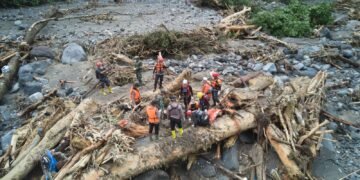























Severe Flooding and Landslides Lead to Over 600 Deaths Across Southeast Asia
Heavy flooding and landslides triggered by extreme weather in Southeast Asia have resulted in a staggering death toll exceeding 600, impacting Indonesia, Thailand, Malaysia, and Sri Lanka. The catastrophic events highlight the dire consequences of tropical storms in the region.
Why It Matters
The rising death toll from severe flooding and landslides underlines the vulnerabilities faced by South Asia and Southeast Asia to climate-related disasters. With millions affected, the crisis not only poses immediate humanitarian challenges but also raises concerns about long-term recovery efforts and infrastructure resilience in these nations.
Key Developments
- The death count has reached over 600:
- Indonesia has reported 442 fatalities.
- Thailand accounted for 170 deaths.
- Sri Lanka has recorded 212 deaths due to Cyclone Ditwah, with 218 individuals still missing.
- Three fatalities have been confirmed in Malaysia.
- Over four million people are facing the aftermath of the disasters:
- Nearly three million individuals are affected in southern Thailand.
- Approximately 1.1 million people are impacted in western Indonesia.
- Rescue operations are ongoing, utilizing helicopters to reach those trapped by blocked roads.
- Reports of looting have emerged as desperation grows in affected areas.
- In Thailand’s Songkhla province, Hat Yai received an unprecedented 335mm (13 inches) of rain in a single day, marking its highest rainfall in 300 years.
- Malaysia has lifted tropical storm warnings but still hosts around 18,700 individuals in evacuation centers.
Full Report
Rescue teams in Indonesia and Thailand continue to search for survivors following significant flooding and landslides. As efforts unfold, officials report that more than four million individuals have suffered due to related weather events. The brunt of the impact has been felt in southern Thailand and western Indonesia, where many communities remain inaccessible.
Rescue operations in Indonesia have been bolstered by aerial support, with helicopters being dispatched to deliver crucial supplies to isolated populations. Communication challenges, caused by the destruction of telecommunications infrastructure, have compounded the difficulties faced by rescue workers seeking to coordinate efforts.
In Thailand, officials indicate that looting incidents have been reported, suggesting rising desperation among residents as they await much-needed assistance. Despite a clear skies forecast after recent days of rain, the recovery is far from complete.
Additionally, across the Bay of Bengal, Sri Lanka is coping with the aftermath of Cyclone Ditwah. With over 200 confirmed dead and many more missing, the storm’s extensive impact has touched numerous districts, affecting over half a million Sri Lankans.
Context & Previous Events
The circumstances leading to this crisis involve a pronounced tropical storm that originated in the Malacca Strait, affecting many parts of Southeast Asia and South Asia simultaneously. The situation marks one of the gravest weather-related disasters in recent history for the region, underscoring the urgent need for improved disaster preparedness and response strategies.