






















U.S. Navy Admiral Defends Non-Binary Sailor Amid Political Backlash
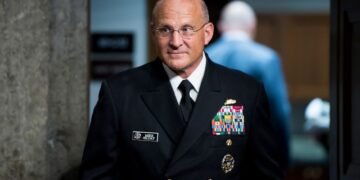
The Chief of Naval Operations expressed strong support for a non-binary sailor following critiques from Republican lawmakers, emphasizing the importance of diversity in the armed forces. This defense comes as the Navy seeks to uphold its commitment to inclusivity while navigating political tensions surrounding military identity and values.
Why It Matters
This incident sheds light on the ongoing debate regarding diversity and inclusion within the U.S. military. As recruitment challenges persist, particularly in a polarized political environment, the responses to issues of identity will significantly impact military culture and operational effectiveness.
Key Developments
- Admiral’s Support: Admiral Michael Gilday praised LTJG Audrey Knutson, a non-binary sailor, calling her service commendable in the context of her grandfather’s experiences as a gay man in the Navy during World War II.
- Criticism from Lawmakers: Senators Marco Rubio and Tommy Tuberville have publicly criticized the Navy’s focus on diversity initiatives, asserting that it distracts from military readiness.
- Social Media Response: An Instagram video featuring Knutson received substantial support, amassing nearly 17,000 likes, reinforcing the positive public perception of diverse representation in the military.
- Recruitment Concerns: Republican lawmakers have claimed that the military’s focus on “wokeness” is detrimental to recruitment, although recent surveys indicate that concerns over social issues are minimal among potential recruits.
Full Report
Admiral Gilday’s Defense
During a hearing, Admiral Gilday articulated his pride in LTJG Knutson, noting the historical significance of her service amidst her grandfather’s experiences of discrimination in the Navy. He highlighted her commitment to her duties aboard the USS Gerald R. Ford, underscoring the values of dignity and respect that are essential for building cohesive teams in the military.
Gilday stated, “If that officer can lawfully join the United States Navy, is willing to serve and willing to take the same oath… then I’m proud to serve beside them.” His statements reflect broader Navy goals to foster an inclusive environment that seeks to bring together individuals from diverse backgrounds.
Political Criticism
Both Rubio and Tuberville voiced their concerns about the Navy’s perceived focus on diversity over traditional military priorities. Rubio pointedly noted the timing of the Navy’s efforts as China ramps up military preparations, suggesting that such initiatives detract from national security objectives.
In contrast, Under Secretary for Personnel and Readiness Gil Cisneros responded by emphasizing that diversity and equal opportunity have long been integral to military training. He reiterated that the commitment to inclusivity does not overshadow the military’s primary mission of combat readiness.
Emphasis on Combat Focus
Sgt. Maj. of the Army Michael Grinston reinforced that while diversity and inclusion training are components of military instruction, they remain secondary to combat training. He clarified the disparity in hours dedicated to marksmanship compared to equal opportunity training, arguing that the military’s focus stays resolutely centered on combat efficiency.
Context & Previous Events
The debate surrounding military inclusivity is not new. Recent discussions within Congress have seen some Republican representatives challenge the Defense Department’s initiatives aimed at fostering diversity. These discussions often cite concerns regarding recruitment and military readiness, with various lawmakers expressing a belief that the current focus on identity politics undermines operational effectiveness. The dynamics surrounding this issue will likely continue to shape military policy and public perception in the coming years.