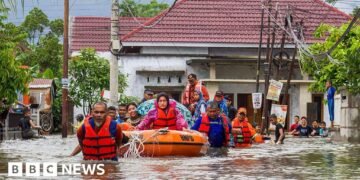























Severe Flooding in Southern Asia Claims Over 600 Lives
Rescue operations are underway across Indonesia, Thailand, Malaysia, and Sri Lanka as torrential rains have unleashed devastating floods and landslides, resulting in a tragic death toll of approximately 600 people. With many still unaccounted for, the situation remains dire as communities grapple with the aftermath of one of the region’s most severe weather events in recent years.
Why It Matters
This catastrophic flooding highlights the increasing severity of weather-related disasters in southern Asia, likely exacerbated by climate change. The unprecedented scale of destruction has left millions affected, raising concerns about infrastructure resilience and the humanitarian response in vulnerable regions. As nations pledge relief efforts, the ongoing crisis underscores the urgent need for improved disaster preparedness and climate adaptation strategies.
Key Developments
- Approximately 600 fatalities reported across Indonesia, Thailand, Malaysia, and Sri Lanka.
- Severe flooding in Indonesia’s Sumatra island has left hundreds missing, with significant damage reported.
- In Thailand, at least 160 deaths have been confirmed during one of the worst flooding events in a decade.
- Sri Lanka has declared a state of emergency, with substantial damage to infrastructure and homes.
Full Report
Impact in Indonesia
Heavy rains have devastated the Indonesian island of Sumatra, where many residents have reported the swift inundation of their homes. As of Saturday, rescue teams are still searching for over 300 individuals who remain unaccounted for. Eyewitness accounts describe harrowing scenes where families struggled against powerful currents. “The flood swept everything away in seconds,” commented a local resident. Various shelters have been established, but the harsh weather conditions are impeding rescue operations.
Severe Flooding in Thailand
Thailand has experienced one of its most severe flood crises in years, particularly in the southern Songkhla province, where water levels rose as high as 10 feet. The extreme weather has claimed at least 160 lives, with over 3.8 million individuals affected across ten provinces. The government is working to implement relief measures, including financial compensation for families who have lost loved ones. Local residents have described feeling abandoned, with reports of extended periods without assistance.
Sri Lanka’s Emergency Response
Sri Lanka is also grappling with significant challenges as Cyclone Ditwah wreaks havoc across the nation. More than 130 fatalities have been reported, with an additional 170 individuals missing. As the government declares a state of emergency, officials indicate that over 15,000 homes have been destroyed and thousands left without access to essential services.
Underlying Causes
Meteorologists attribute the extreme weather patterns in Southeast Asia to the unusual interactions between Typhoon Koto in the Philippines and the rare Cyclone Senyar formed in the Malacca Strait. This year’s monsoon season has been particularly intense, reinforcing concerns about climate change’s impact on regional weather patterns.
Context & Previous Events
The region frequently experiences heavy rainfall during the monsoon season, typically occurring from June to September. However, this year’s floods have been unprecedented in their severity, calling into question the ability of affected countries to respond effectively to such extreme weather phenomena.