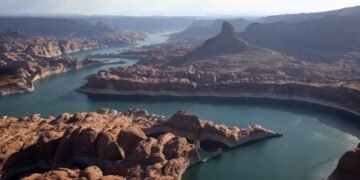























Decline of Lake Powell: Storage Capacity Shrinks Amid Drought Concerns
Lake Powell, a vital reservoir in the Colorado River Basin, has experienced a troubling reduction in its storage capacity, losing nearly 7% of its potential since the construction of the Glen Canyon Dam in 1963. This alarming trend is primarily attributed to a prolonged drought, sediment accumulation, and the increasing challenges posed by climate change.
Why It Matters
The decline of Lake Powell is significant as it threatens water supply for over 40 million people across seven Western states and Mexico. With both Lake Powell and Lake Mead, the largest reservoir in the U.S., experiencing drastic reductions in water levels, the implications for drinking water, agriculture, and hydropower generation are dire. As conditions continue to worsen, it raises urgent questions about water management and sustainability in the region.
Key Developments
- A report by the US Geological Survey and the Bureau of Reclamation indicates that Lake Powell lost an average of 33,270 acre-feet, or about 11 billion gallons of water, each year between 1963 and 2018.
- Currently, Lake Powell is at approximately 25% of its total capacity, with recent data highlighting a drop below the critical threshold of 3,525 feet above sea level.
- The federal government declared a water shortage on the Colorado River for the first time in August, resulting in mandatory water use reductions beginning in January.
- National Oceanic and Atmospheric Administration experts predict that drought conditions will persist and may worsen in the upcoming months.
Full Report
Water Supply and Reservoir Challenges
Lake Powell’s capacity is diminishing due to sediment carried in by the Colorado and San Juan rivers, which settles at the reservoir’s bottom. This sedimentation further reduces the amount of water that the reservoir can hold, compounding the challenges posed by climate change and prolonged drought conditions.
As of recent reports, Lake Powell’s water level has fallen significantly, raising alarm about hydropower generation capabilities that millions in the West depend on for electricity. The report emphasizes the importance of using comprehensive scientific data to understand the water availability challenges facing Lake Powell as stakeholders plan for the future.
Regional Impacts
Both Lake Powell and nearby Lake Mead are crucial for supplying drinking water and irrigation for numerous rural farms, ranches, and Native communities across the region. With shrinking water supplies, the socioeconomic stability of these communities is at risk, amplifying the urgency of addressing the evolving water crisis.
Tanya Trujillo, assistant secretary for water and science at the U.S. Department of the Interior, highlighted the need for accurate and comprehensive scientific insights to guide future decisions regarding water availability in the Colorado River system.
Context & Previous Events
In August, a historic declaration of a water shortage on the Colorado River marked the first time federal action was taken in response to Lake Mead’s critical low water levels. This announcement triggered mandatory cuts to water consumption for states in the Southwest, underscoring the severe challenges posed by the ongoing drought, which has now extended over two decades.
As conditions continue to deteriorate, the severity of the crisis in the Colorado River Basin demands immediate attention and action to secure water resources for future generations.