






















Tensions Escalate as Maduro Vows to Defend Venezuela Against U.S. Aggression
Venezuelan President Nicolas Maduro has reinforced his commitment to resist perceived threats from the United States, declaring that “failure is not an option.” His remarks come amidst escalating tensions with the Trump administration and recent U.S. military actions against drug trafficking operations believed to originate in Venezuela.
Why It Matters
The ongoing conflict between the U.S. and Venezuela has significant implications for regional stability and international relations. Maduro’s defiance reflects his administration’s attempts to rally domestic support amid external pressures, including military actions and accusations of human rights violations. With Cuba also expressing concerns over U.S. intentions, the situation raises questions about future U.S. policies in Latin America and their potential consequences.
Key Developments
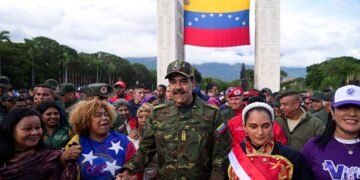
- Maduro spoke to supporters in Caracas, advocating for national defense against imperialism.
- U.S. military actions involving strikes on drug trafficking vessels have reportedly killed at least 80 individuals since September.
- Cuban officials condemned U.S. military presence in the region as dangerous and a violation of international law.
- Critics of U.S. actions cite concerns over legality and extrajudicial killings, with only 29% of voters supporting the current policy.
- The U.S. has designated Venezuela’s Cartel de los Soles as a foreign terrorist organization linked to drug importation.
- President Trump hinted at the possibility of dialogue with Maduro, aiming for a peaceful resolution.
Full Report
Defiance from Maduro
During a recent rally in Caracas, Maduro appeared in military fatigues and highlighted the necessity to defend Venezuela against what he termed “imperialist threats.” He emphasized the importance of national sovereignty, responding directly to U.S. military operations targeting drug trafficking activities linked to Venezuela.
U.S. Military Actions
Since September, U.S. military forces have engaged in operations against vessels allegedly involved in drug trafficking in international waters, resulting in significant casualties. Maduro’s administration contends that these actions represent an assault on Venezuela’s sovereignty, further intensifying the existing hostilities between the nations.
International Reactions
Cuba’s foreign minister, Bruno Rodriguez, criticized the U.S. strategy, describing it as aggressive and aimed at destabilizing Venezuela. He stressed the risks to public safety in the hemisphere, urging the American populace to advocate against these military interventions.
Political Dynamics
Donald Trump’s administration, like that of his predecessor Joe Biden, does not recognize Maduro as Venezuela’s legitimate leader after a contentious election. The current Venezuelan government faces ongoing accusations regarding human rights abuses against dissenters. This has led to a fraught political environment as Maduro remains in power despite opposition claims of electoral fraud.
Context & Previous Events
In addition to the military actions undertaken by the U.S., Maduro has faced mounting international pressure regarding governance and human rights issues. His government’s ongoing struggles with various internal and external pressures contribute to an increasingly complex political landscape in Venezuela and the broader Latin American region.






