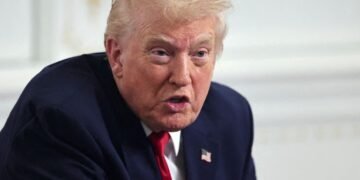























U.S. Set to Intensify Action Against Venezuelan Drug Traffickers, Trump Announces
President Donald Trump has signaled an escalation in U.S. military efforts against suspected drug trafficking operations originating from Venezuela, indicating that actions would soon transition from naval to land-based assaults. This move follows a series of strikes against boats allegedly transporting narcotics to the U.S., which the U.S. government argues are tied to Venezuelan President Nicolas Maduro’s regime.
Why It Matters
The potential shift in strategy marks a significant escalation in U.S. military involvement in the region, directly tied to long-standing tensions between the U.S. and Venezuela. With Venezuela being accused of harboring drug trafficking organizations, the implications of intensified military action could further destabilize an already volatile situation in the South American nation, drawing international scrutiny and possibly impacting U.S. relations with allies in the region.
Key Developments
- Trump emphasized that operations would soon extend to land, stating, "The land is easier, but that’s going to start very soon."
- The U.S. has conducted over 21 strikes on boats deemed to be engaging in narcotics trafficking, resulting in more than 80 deaths, which Venezuelan officials label as acts of murder.
- The Pentagon has categorized certain Venezuelan drug gangs as foreign terrorist organizations, aligning them with groups like al Qaeda.
- President Maduro has dismissed U.S. claims as a fabrication aimed at undermining his regime, asserting that it is a pretext for controlling Venezuela’s natural resources.
Full Report
Military Actions in the Region
During a Thanksgiving call with military personnel, Trump underscored the U.S.’s commitment to countering drug trafficking, stating that they were prepared to take measures both at sea and on land. The U.S. has deployed advanced naval resources, including its most sophisticated aircraft carrier, as part of ongoing operations aimed at intercepting drug shipments.
Despite Trump’s assertions, the U.S. has yet to provide concrete evidence such as photographs of the seized cargo to substantiate claims of smuggling links to the Venezuelan government. The administration has released video footage of naval strikes, which critics have called into question due to the lack of supporting evidence.
Venezuela’s Response
In reaction to the U.S. actions, Maduro criticized the strikes as acts of aggression and accused the U.S. of fabricating a drug war to justify military interventions. Venezuelan officials have further claimed that Trump’s motives are more about seizing control of the nation’s abundant oil resources and precious metals, like gold and diamonds.
Maduro, widely viewed internationally as a dictator, has vowed to protect Venezuela, stating that he would defend the country against what he describes as imperial threats. This position has led to heightened rhetoric and a standoff between the two nations, complicating prospects for any negotiations.
Context & Previous Events
The U.S. has accused Maduro’s administration of being entrenched in drug trafficking activities, leading to significant military responses over recent months. In January, another Venezuelan drug trafficking organization, Tren de Aragua, was designated a terrorist group by the U.S. government. The escalating tensions include accusations of election fraud directed at Maduro, further isolating him on the global stage as many nations criticize his regime.
As the U.S. prepares for a broader military approach, the implications remain uncertain, with both nations entrenched in their positions on the drug trade and governance.