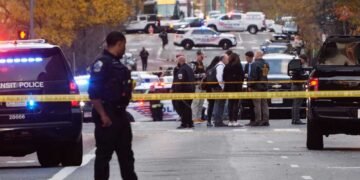























National Guard Soldiers Shot Near White House: Afghan Suspect’s Background Under Scrutiny
A tragic shooting incident near the White House on Wednesday has left two National Guard soldiers injured, with a suspect now identified as Rahmanullah Lakanwal, an Afghan national. His entry into the U.S. in 2021 raises urgent questions regarding the vetting process under Operation Allies Welcome, a program intended to resettle Afghans fleeing Taliban retribution.
Why It Matters
This incident underscores ongoing concerns regarding national security amidst the resettlement of Afghan refugees. As the nation contemplates the consequences of swiftly implemented immigration programs, scrutiny of their effectiveness has intensified, particularly in light of recent violent events involving Afghan nationals.
Key Developments
- Rahmanullah Lakanwal, the suspected shooter, entered the U.S. in 2021 under Operation Allies Welcome.
- His motives for the shooting remain unknown at this time.
- Operation Allies Welcome was created to assist vulnerable Afghans, including those who collaborated with U.S. forces during the Afghanistan conflict.
- Approximately 40% of individuals who entered under this program were eligible for Special Immigrant Visas due to their service.
- After the shooting, former President Trump criticized the vetting process and called for immediate re-evaluation of Afghan nationals already in the U.S.
- Following the incident, U.S. Citizenship and Immigration Services halted the processing of immigration applications for Afghan nationals.
Full Report
Shooter’s Background and Program Overview
Rahmanullah Lakanwal was part of a larger group of Afghans evacuated from Kabul in August 2021, during the chaotic U.S. withdrawal. The initiative aimed to protect those at risk from Taliban reprisals, allowing them temporary legal status in the U.S. under a parole system. This program was implemented after a deal struck by the Trump administration to withdraw American troops. By the time of its conclusion, nearly 200,000 Afghans had resettled in the U.S. through Operation Allies Welcome and its successor, Operation Enduring Welcome.
Vetting Process
Officials from the Department of Homeland Security (DHS) emphasized that the vetting process for Afghan entrants was rigorous, involving extensive biometric and biographic screenings managed by professionals from various agencies. These checks were designed to minimize risks posed by potential security threats. However, criticisms arose, particularly from Republican lawmakers, about the thoroughness of the vetting. A 2024 report from the DHS Office of Inspector General acknowledged lapses in data accuracy within some files. A separate report from the Department of Justice raised alarms regarding the expedited process, indicating that a number of Afghan evacuees were later identified as individuals on terrorism watch lists, although the majority posed no security risks.
Immediate Consequences
In the wake of the shooting, Trump vocally opposed the current immigration policy, demanding a comprehensive review of Afghan nationals residing in the U.S. CIA Director John Ratcliffe noted that Lakanwal’s acceptance into the U.S. was partly justified by his claimed connections to U.S. government operations, including involvement with the CIA. The repercussions of this incident have led to immediate policy implications, with immigration applications for Afghan nationals being paused as authorities reassess the situation.
Context & Previous Events
Operation Allies Welcome was launched after the fall of Kabul to the Taliban in August 2021, amid intense international scrutiny. President Biden asserted that the evacuation of Afghans represented an unprecedented response to a humanitarian crisis. Under this program, Afghans were granted temporary parole to facilitate their safe resettlement in the U.S., aimed particularly at those who had overwhelmingly supported U.S. operations over the last two decades. The transition to Operation Enduring Welcome expanded resettlement efforts but continues to evoke criticism regarding the vetting effectiveness and long-term implications for U.S. security.
The situation remains dynamic as authorities investigate the recent shooting and navigate the broader implications for Afghan nationals in the U.S.






