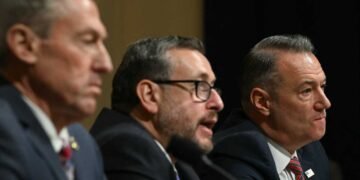























Immigration Agency Leaders Testify Amidst Recent Violence
Federal immigration agency heads faced intense scrutiny during a House Homeland Security hearing following the tragic shooting deaths of two U.S. citizens by federal officers in Minneapolis. This is the first congressional appearance for these leaders since the incidents, and it highlights ongoing tensions within the immigration enforcement framework as Congress approaches a critical funding deadline for the Department of Homeland Security.
Why It Matters
The hearing underscores a profound division between Republicans and Democrats regarding immigration policy and enforcement strategies, particularly in the wake of public outcry over the recent violence. As Congress wrestles with funding allocations, both parties grapple with the implications of immigration enforcement on community safety and trust in law enforcement.
Key Developments
-
Impact of Recent Shootings: The deaths of Renee Macklin Good and Alex Pretti were central topics, with committee members from both parties expressing grief and demanding thorough investigations.
-
Deflection of Criticism: Acting ICE Director Todd Lyons refrained from commenting on the ongoing investigations and defended the actions of agency officials, while also emphasizing that U.S. citizens should not fear detention.
-
Training Concerns: Questions arose about the adequacy of training and oversight for immigration officers, with Lyons outlining current officer training but not specifying incidences of misconduct.
-
Bipartisan Issues: Republicans acknowledged concerns typically raised by Democrats, such as the deployment of roving patrols and calls for body cameras to enhance accountability.
- Funding Uncertainty: As the funding deadline approaches, agency leaders indicated that their operations may be minimally impacted, although they agreed that public safety could be compromised during a shutdown.
Full Report
The Fallout From Minneapolis Shootings
During the hearing, Representative Andrew Garbarino, a Republican from New York, condemned the recent deaths, labeling them "unacceptable and preventable." He emphasized the need for a "complete" investigation into the incidents to restore public trust. In his opening remarks, Garbarino expressed empathy for the victims’ families, while urging caution in drawing hasty conclusions about law enforcement activities.
Lyons attempted to shift focus away from criticism of President Trump and Homeland Security Secretary Kristi Noem, who labeled Pretti a "domestic terrorist." He stated that U.S. citizens should not be concerned about their legal status during immigration enforcement.
Training and Accountability
Lyons detailed the training process for ICE officers, noting a three-month program that includes significant coursework on federal immigration law. However, he declined to share specifics regarding any personnel disciplinary actions. Notably, he acknowledged objectionable language used by officers, as captured on video, and affirmed that such statements do not reflect ICE’s values.
Shared Republican and Democratic Concerns
In an unusual show of bipartisan agreement, both parties expressed concerns about the deployment of agents in urban areas and the enhancement of body camera use for greater oversight. Lyons indicated the agency currently possesses 3,000 cameras for its 13,000 officers, while Customs and Border Protection Commissioner Rodney Scott highlighted the need for comprehensive funding to fully realize a body camera program.
Funding Implications
With a funding deadline looming, agency leaders remained cautious about the potential impacts of a government shutdown on their operations. USCIS Director Joseph Edlow explained that his agency’s funding relies primarily on application fees; therefore, his staff would continue to be compensated even in the event of a shutdown. Conversely, Lyons acknowledged that a lapse in funding could affect efforts related to transnational crime, but he did not foresee immediate repercussions for immigration activities.
Context & Previous Events
This hearing follows heightened scrutiny over the actions of immigration officers, particularly their presence and enforcement tactics in major cities beyond traditional border areas. The recent casualties have intensified the debate regarding the efficacy and ethics of current immigration strategies. Previous reports have documented instances where U.S. citizens were inadvertently detained, raising alarms about the practices of ICE and CBP.






