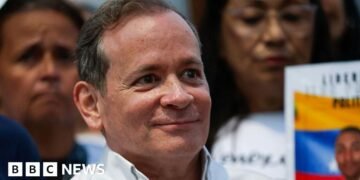























Venezuelan Political Figure Juan Pablo Guanipa Rearrested Hours After Release
Juan Pablo Guanipa, a prominent Venezuelan opposition leader, was taken back into custody by national security forces on Sunday, just hours after being freed from detention. His recapture highlights ongoing tensions in Venezuela concerning political dissent and the treatment of political prisoners.
This development is significant as it underscores the precarious situation for political figures in Venezuela, where government crackdowns on dissent are common. Guanipa’s brief release and subsequent arrest signal the regime’s unwillingness to tolerate opposition, further stifling hopes for political reform and dialogue in the nation.
Key Developments
- Juan Pablo Guanipa was apprehended shortly after his release from prison.
- His initial release occurred as part of a broader trend of the Venezuelan government intermittently allowing political prisoners to gain temporary freedom.
- The re-arrest reflects ongoing government efforts to repress opposition voices within the country.
Full Report
Guanipa, who has been an influential figure in Venezuela’s political landscape, was arrested on charges that his supporters say are politically motivated. His recent release reportedly came as part of a limited concession by the government amid rising domestic and international pressures on President Nicolás Maduro’s administration. However, shortly after his freedom, security forces reasserted their grip by re-arresting Guanipa, marking another episode in Venezuela’s longstanding struggle against political oppression.
The Venezuelan government has faced criticism for its treatment of political prisoners, prompting various human rights organizations to call for reforms and the recognition of political freedoms. Guanipa’s case serves as a poignant example of the broader climate of fear that envelops many opposition figures, who often find themselves under surveillance or in detention. His supporters have condemned the recent actions by the state as repressive and emblematic of the ongoing crisis in governance in Venezuela.
Context & Previous Events
Guanipa’s political career has been marred by multiple arrests due to his active opposition to the Venezuelan government. His latest detention follows a series of releases and arrests among opposition leaders, raising questions about the trajectory of political reform in the country. The current climate has seen periodic releases of political prisoners by the government, typically accompanied by subsequent re-arrests, suggesting a strategy to manage dissent rather than abolish it.