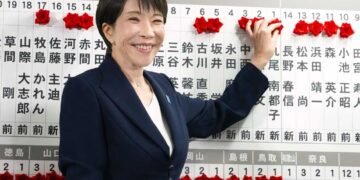























Japan’s First Female Prime Minister Takaichi Achieves Historic Election Victory
In a landmark moment for Japanese politics, Sanae Takaichi, the country’s first female Prime Minister, has led the ruling Liberal Democratic Party (LDP) to its largest electoral win in 71 years. This unprecedented success comes amid challenges such as a limited campaign period and harsh winter weather, positioning Takaichi to push forward an ambitious, potentially divisive political agenda.
Why It Matters
Takaichi’s victory represents a significant shift in Japan’s political landscape, providing her government with the power to possibly amend the nation’s pacifist constitution and implement bold economic reforms. With a newfound mandate, she aims to enhance Japan’s international standing while navigating a complex relationship with both domestic and global stakeholders.
Key Developments
- The LDP secured a two-thirds majority in the lower house, allowing it to override opposition vetoes.
- An astonishing 90% of candidates backed by the LDP won their seats.
- Takaichi expressed her intention to pursue constitutional amendments and a referendum on Japanese defense policy.
- The LDP has shifted towards a coalition with the right-wing Japan Innovation Party, following the exit of the centrist Komeito Party.
- Takaichi plans to meet with U.S. President Trump next month amid heightened tensions in the region.
Full Report
Elections and Results
The recent snap elections, held with the briefest campaigning period in Japan’s post-war history, resulted in a remarkable triumph for Takaichi’s LDP, achieving a historic two-thirds majority. This major win grants her the authority to potentially amend Japan’s post-war constitution, a significant goal for the LDP since its establishment in 1955. Just 10% of the candidates endorsed by the opposition succeeded, demonstrating a decisive shift in voter sentiment.
Policy Ambitions and Economic Forecasts
Amid her celebratory remarks at the LDP headquarters, Takaichi acknowledged the trials ahead, particularly regarding her economic and security initiatives. She aims to initiate a major shift in Japan’s fiscal policies, and her plans have already spurred a rise in the Nikkei stock index and fluctuated the yen’s value. Despite Japan’s daunting debt levels, Takaichi remains confident that her electoral mandate empowers her to advance these priorities.
Shifting Political Landscapes
The political landscape in Japan is evolving, marked by an increasing rightward tilt since Takaichi’s election as LDP president last year. The exit of Komeito, a centrist coalition partner, and its subsequent formation of the Centrist Reform Alliance, signals a changing voter alignment. Komeito leaders resigned following their losses in the recent elections, highlighting the volatile nature of Japan’s political alliances.
International Relations and Defense Strategy
Stemming from her predecessor’s vision of a “free and open Indo-Pacific,” Takaichi intends to strengthen Japan’s defense posture. She has indicated potential revisions to the country’s long-standing policies regarding nuclear weapons, amidst rising tensions with China. Her upcoming engagement with President Trump is anticipated to further influence Japan’s foreign policy and defense strategies in a region increasingly wary of Chinese ambitions.
Context & Previous Events
Takaichi’s victory follows a series of electoral gains for the LDP under prominent leaders like former Prime Minister Shinzo Abe, marking a historical pattern of strong party leadership in Japan’s political arena. The recent coalition with the Japan Innovation Party reconfigures the LDP’s political strategy during a period of shifting public opinion and international dynamics.






