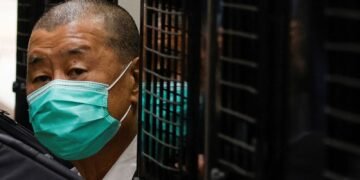























Media Tycoon Jimmy Lai Sentenced to 20 Years for National Security Offenses in Hong Kong
Pro-democracy campaigner Jimmy Lai has received a 20-year prison sentence after being convicted of offenses against national security in Hong Kong. The media mogul was found guilty of conspiracy to collude with foreign forces and publishing seditious materials, marking a significant moment in the ongoing suppression of dissent in the region.
The case has drawn international attention, reflecting the escalating tensions between Hong Kong’s pro-democracy advocates and the enforcement of stringent national security laws by Beijing. Lai’s sentencing is viewed as a critical point in the fight for free expression and democracy in Hong Kong.
Key Developments
- Lai was sentenced to 20 years in prison for national security offenses, including collusion and publishing seditious materials.
- He has consistently denied the charges, claiming he is a “political prisoner” targeted by the Chinese government.
- International leaders, including U.S. President Donald Trump and U.K. Prime Minister Sir Keir Starmer, have criticized his prosecution.
- Calls for his release have come from various entities, including Human Rights Watch and the Taiwanese government.
- Discussions regarding potential negotiations for Lai’s release may proceed if he opts not to appeal his sentencing.
Full Report
Conviction and Sentencing
The Hong Kong court deemed Lai’s actions part of severe offenses under national security law, labeling him the “mastermind” behind collusion conspiracies with foreign entities. The 78-year-old politician and press advocate faces the most severe penalties available for such actions, as the court emphasized the grave nature of the offenses.
Lai’s Background and Arrest
Born in mainland China and relocating to Hong Kong as a child, Lai’s trajectory is marked by his rise from a garment factory worker to a prominent advocate for democracy. His founding of the pro-democracy newspaper Apple Daily aimed to uphold freedom of speech amid growing governmental restrictions. Following the 2020 imposition of national security laws triggered by massive protests, Lai and his family were arrested, leading to subsequent charges that he advocated against.
International Reactions
The global response has been swift. Key world leaders have condemned the harsh treatment of Lai, with discussions regarding his fate occurring at the highest diplomatic levels. Sir Keir Starmer has publicly stated that the issue remains on the agenda in dialogues with Chinese officials, while reports indicate that Western diplomats are prepared to negotiate for Lai’s release in the aftermath of his sentencing.
Elaine Pearson of Human Rights Watch characterized the penalty as a “death sentence” for independent journalism in Hong Kong, indicating broader fears for press freedoms. Meanwhile, Taiwan’s government voiced that Lai’s incarceration undermines basic rights and freedoms essential for holding power to account.
Context & Previous Events
Lai’s arrest in August 2020 followed a significant crackdown on dissent following the national security law’s implementation, which was introduced in response to widespread anti-government protests. Prior to this, Lai faced various charges, showcasing a strategic pattern of repression against pro-democracy figures in Hong Kong.