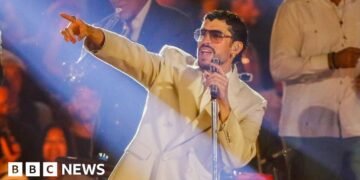























Bad Bunny, the chart-topping Latin music sensation, is leveraging his influential status to shine a spotlight on pressing social issues. Through his music and public persona, he emphasizes the importance of supporting the LGBTQ community while advocating for Puerto Rico’s quest for self-determination.
Bad Bunny’s commitment to these causes illustrates the significant role artists play in societal discourse. As an ambassador for his culture and an advocate for underrepresented communities, his actions resonate with fans and draw attention to critical matters affecting Puerto Rico and the LGBTQ population.
Key Developments
- Bad Bunny expresses a sense of duty to use his influence for positive change.
- He continually integrates themes of cultural pride and advocacy for the LGBTQ community in his music.
- The artist emphasizes Puerto Rico’s push for autonomy from U.S. governance, a territory since 1898.
Full Report
Advocacy Through Art
Bad Bunny has articulated his responsibility to highlight significant social issues through his platform. As an influential figure, he believes that his ability to reach a wide audience comes with the duty to advocate for marginalized communities. His music often features themes that reinforce cultural pride while also addressing the challenges faced by the LGBTQ community.
Focus on Puerto Rico
Beyond cultural representation, Bad Bunny has also highlighted Puerto Rico’s ongoing struggle for self-determination. The territory, which has remained an overseas U.S. territory for over a century, faces unique political and social challenges. His vocal support underscores the urgency of this issue and the need for a resurgence in dialogue surrounding Puerto Rican autonomy.
Context & Previous Events
Puerto Rico has been an overseas U.S. territory since 1898, and discussions regarding its political status and rights have been ongoing for decades. Bad Bunny’s rise to fame coincides with heightened awareness of social justice issues, positioning him as a significant voice in contemporary discussions. His public support for both the LGBTQ community and Puerto Rico’s self-determination reflects the broader trends of activism among today’s artists.