






















U.S. and Iran Hold Indirect Nuclear Talks in Oman Amid Rising Tensions
Recent indirect negotiations between Iran and the United States have taken place in Muscat, Oman, signaling a cautious step back into discussions regarding Tehran’s nuclear program. Notably, the U.S. sent its top military commander to these talks, highlighting the tense geopolitical landscape surrounding the ongoing debate.
Why It Matters
The negotiations come at a critical time as tensions escalate between the U.S. and Iran, particularly following Iran’s crackdowns on protests and military actions in the Arabian Sea. Both nations are under pressure to reach an agreement that addresses nuclear proliferation while avoiding further military escalation in the region, as Gulf Arab nations express fears of potential conflict.
Key Developments
-
U.S. Military Presence: U.S. Navy Adm. Brad Cooper’s attendance at the talks underscores the military stakes, given the USS Abraham Lincoln and accompanying warships currently positioned near Iran.
-
Warnings from the White House: President Trump stated discussions were productive but warned Iran of "steep consequences" if no agreement is reached regarding its nuclear program.
-
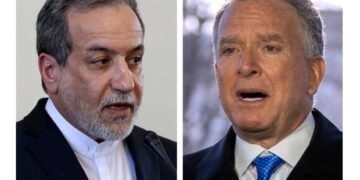
Iran’s Position: Iranian Foreign Minister Abbas Araghchi emphasized the need for negotiations to occur in a non-threatening environment, arguing that dialogue should be free from pressure.
- End of Current Talks: Diplomats from both nations are returning to their capitals after indicating this round of discussions has concluded, with evaluations of the outcomes anticipated in the near future.
Full Report
Military Presence at Negotiations
During the talks, Adm. Brad Cooper, representing the U.S. Central Command, was in formal attire, a stark reminder of the military assets deployed in the region. The USS Abraham Lincoln and its escort vessels were recently relocated to the Arabian Sea, coinciding with heightened tensions following protests in Iran that resulted in significant casualties and detentions. The U.S. recently took military action, intercepting an Iranian drone and addressing Iran’s attempts to stop a U.S.-flagged ship in the strategic Strait of Hormuz.
Diplomatic Dynamics
In addressing the negotiations, Araghchi referred to the ongoing mistrust that complicates discussions. He stated, “The prerequisite for any dialogue is refraining from threats and pressure.” Araghchi also expressed a degree of optimism about future talks, suggesting that the discussions were constructive in clarifying positions and possibly establishing a framework for upcoming negotiations.
U.S. Response
Following the talks, the U.S. military showcased its strength by publicly sharing images of the carrier group in the Arabian Sea, reinforcing its stance of “Peace through Strength.” Meanwhile, Trump emphasized the necessity of an agreement and noted additional negotiations are already being planned for the following week.
New Sanctions on Iran
Shortly after the talks concluded, the U.S. government announced new sanctions targeting Iran’s energy sector. The sanctions specifically target 14 oil tankers accused of evading restrictions, alongside several trading firms and individuals linked to Iranian oil exports. A statement from the U.S. State Department condemned the Iranian government’s actions during recent protests and affirmed the commitment to countering illicit Iranian oil shipping practices.
Context & Previous Events
In June 2025, an Israeli military campaign against Iran raised further stakes in the ongoing discussion of nuclear capabilities. Before these recent developments, Iran had been enriching uranium to levels close to weapons-grade purity, evoking global concern regarding its nuclear intentions. The U.N.’s International Atomic Energy Agency (IAEA) has highlighted Iran’s unique position as the only state enriching uranium to such levels without the presence of nuclear arms, complicating international security considerations.
These negotiations, although indirect, provide a platform for both nations to evaluate their stances amidst a backdrop of military presence and international scrutiny.






