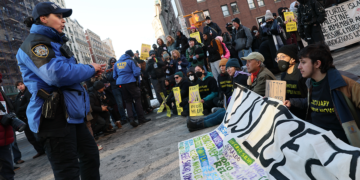























Protests Erupt at Columbia University Amid Anti-Immigration Demonstration
Protests escalated Thursday outside Columbia University, resulting in the arrest of over a dozen individuals who reportedly defied police orders. The event underscores ongoing tensions surrounding immigration policies at one of America’s premier institutions.
Why It Matters
This incident reflects broader national debates on immigration enforcement and the rights of universities to self-regulate. As students and faculty call for Columbia to adopt sanctuary campus policies, the response from law enforcement and the university administration raises questions about activism, university autonomy, and federal immigration policy.
Key Developments
- Arrests Made: Thirteen agitators were arrested for blocking an entrance to Columbia University and failing to disperse after police instructions.
- University Statement: Columbia affirmed the right to peaceful protest but asserted that claims regarding ICE’s access to campus facilities are misleading.
- Warrant Requirements: The university clarified that U.S. Immigration and Customs Enforcement must obtain a judicial warrant to enter non-public areas, such as classrooms and dormitories.
- Context of Tensions: Recent developments involving a former Columbia student, now facing deportation issues, have heightened emotions around immigration enforcement at the university.
Full Report
Protest Details
The demonstration commenced around 1:30 p.m. local time, with attendees comprised of students, faculty, and activists advocating for Columbia to establish a sanctuary campus. Protesters wore black shirts emblazoned with slogans like "Sanctuary Campus Now" and "ICE Off Campus." According to the NYPD, their efforts to block access to the university led to multiple warnings to disperse, which went unheeded for about 20 minutes.
Law Enforcement Response
NYPD officers intervened and subsequently arrested individuals who impeded traffic. A police spokesman confirmed that those arrested were issued criminal court summonses, although it remains unclear whether they were affiliated with Columbia as students or staff.
Columbia University’s Stance
The administration responded to the protest through a public statement, emphasizing its support for the right to protest. However, it countered claims made during the demonstration, insisting that it does not grant ICE agents the authority to access certain areas of the campus without proper judicial warrants. The university specified that an administrative warrant is insufficient for such access. Columbia further asserted that no members of its leadership have ever requested the presence of ICE officers on campus.
Context & Previous Events
This protest aligns with ongoing frustrations following the arrest of Mahmoud Khalil, a former Columbia student and anti-Israel activist, by federal immigration agents in March 2025. Khalil, a legal permanent resident, was ordered released from detention, but he remains embroiled in a legal battle regarding his potential deportation. An appeals court previously ruled against a lower court judge, complicating Khalil’s situation further and adding to the university’s atmosphere of concern regarding immigration matters.
This series of events encapsulates the complexities of activism in an environment where academic and governmental policies intersect.






