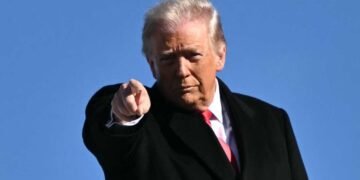























President Trump’s administration has moved forward with a controversial rule allowing for the reclassification of federal employees, enabling the president to dismiss them at will without the standard job protections. Starting March 9, significant changes to civil service employment policies will take effect, despite widespread public opposition.
The rule poses serious implications for the stability and apolitical nature of the federal workforce. Critics argue that it erodes the safeguards designed to prevent politically motivated firings, which could undermine the integrity of public service and result in a government more focused on loyalty to the president than on serving the American people.
Key Developments
- The Office of Personnel Management (OPM) announced a final rule that allows the president to reclassify federal employees to at-will status starting March 9.
- Previous protections under the civil service system, which are intended to maintain non-political employment, will be weakened.
- Public comments overwhelmingly opposed the rule, with 94% of the 40,000 comments received expressing concern.
- The administration argues the change is necessary for improving efficiency and accountability, responding to perceived government obstructions.
- Legal challenges are already underway against the new rule, including a lawsuit by Democracy Forward aimed at preserving employee rights.
Full Report
Details of the New Rule
Aiming to enhance governmental efficiency, the rule titled “Improving Performance, Accountability and Responsiveness in the Civil Service” will permit the reclassification of thousands of federal jobs. Under this plan, the president can designate certain employees in “policy-influencing” roles as at-will, allowing for easier termination. OPM has indicated that potentially up to 50,000 positions could be affected.
Public Opposition and Criticism
Despite the administration’s claims that the rule will streamline operations, significant opposition has arisen. Max Stier, president of the nonpartisan Partnership for Public Service, stated that the rule could politicize federal employment, jeopardizing the principle of nonpartisan service. Critics warn this could enable the removal of skilled employees who prioritize public service over loyalty to the president.
Current State of Federal Employment
There are already about 4,000 political appointees who can be dismissed without cause, a number considered high by global standards. The new rule expands this power, which raises alarms among advocates for civil service protection.
Concerns Over Legal Protections
While it is claimed that reclassified employees will still be protected from retaliatory practices and may file discrimination claims, critical protections such as those available through the Merit Systems Protection Board will no longer apply. Furthermore, recent changes to the Office of Special Counsel’s operations have raised additional questions about the independence of oversight for whistleblower complaints.
Context & Previous Events
In October 2020, President Trump first proposed this plan to remove protections for a significant number of civil servants. Over the course of his presidency, he has displayed a readiness to dismiss federal employees he views as obstructing his agenda, including officials involved in the January 6 prosecutions. The current rule is the culmination of this ongoing effort to reshape the federal workforce in accordance with his political needs.