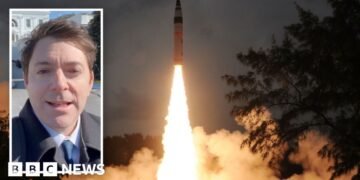























The Expiration of the New START Treaty: Implications for Nuclear Arms Control
The New START Treaty, a pivotal arms control agreement between the United States and Russia, officially expired on February 5, 2026. This development eliminates any restrictions on the stockpiling of nuclear weapons by these two nations, raising concerns about a potential arms race in the 21st century.
Why It Matters
The expiration of the New START Treaty marks a significant turning point in global nuclear policy. With no limits on nuclear arsenals, the stakes for international security have escalated, raising fears of increased tensions and competition between the world’s foremost nuclear powers. The treaty had been a cornerstone of nuclear arms control for over a decade, and its absence poses serious ramifications for military stability and diplomacy.
Key Developments
- The New START Treaty, initially signed in 2010, was a continuation of nuclear agreements dating back to 1991.
- As of February 5, 2026, there are no longer any limitations on the nuclear capabilities of the United States and Russia.
- Correspondents highlight the urgency for a new framework to address arms control in the current geopolitical climate.
Full Report
Understanding the Expiration
The New START Treaty was a bilateral agreement aimed at reducing the nuclear arsenals of the U.S. and Russia, capping them at 1,550 deployed strategic warheads each. Its expiration has triggered widespread discussions among experts and policymakers regarding future nuclear negotiations and strategic stability.
Potential Consequences
With the treaty no longer in effect, both nations have the freedom to expand their nuclear stockpiles without oversight. Analysts warn that this dynamic could lead to an escalation of tensions, with both sides possibly seeking to modernize their arsenals and increase their military capabilities, compounding existing geopolitical rivalries.
Calls for Action
The absence of a nuclear arms control framework is prompting urgent discussions among stakeholders about the need for new treaties. Some experts advocate for renewed dialogue between the U.S. and Russia to foster transparency and prevent an unchecked arms race.
Context & Previous Events
The New START Treaty was a significant milestone in the ongoing effort to manage nuclear arms, building upon earlier agreements between the two superpowers. Since its signing in 2010, it has played a crucial role in stabilizing nuclear relations, continuing a series of arms control measures that began in 1991. The treaty’s expiration now poses fresh challenges for future arms control initiatives and international relations.