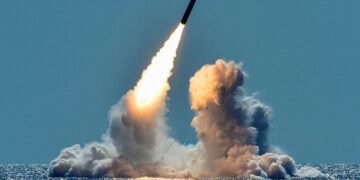























As of Thursday, the last remaining nuclear arms control treaty between the United States and Russia will expire, initiating a significant shift in international security dynamics. For the first time in over fifty years, there will be no formal legal limitations on the nuclear arsenals of the two superpowers, prompting concerns over the potential onset of a new arms race.
This development marks a critical juncture in global security, heightening fears of escalating nuclear tensions. With the absence of legal caps on nuclear capabilities, experts warn that the geopolitical landscape could become more unpredictable, elevating the risks of conflict and misunderstandings between nuclear states.
Key Developments
- The expiring treaty, known as New START, had been in place since 2010, capping both U.S. and Russian deployed strategic warheads at 1,550.
- Relations between the U.S. and Russia have significantly deteriorated since Russia’s invasion of Ukraine in 2022, leading to a breakdown in arms control negotiations.
- Former U.S. President Donald Trump has yet to endorse an informal extension proposed by Russian President Vladimir Putin, which would last for one year.
- Discussions about including additional nuclear powers, such as China, into future treaties have emerged, though experts caution that such trilateral negotiations remain unlikely.
Full Report
Impacts of the Treaty Expiration
The expiration of New START signifies a major turning point for U.S.-Russia relations, diminishing decades of cooperative arms control efforts. Vasily Kashin, a research fellow in Moscow, indicates that this scenario could lead to unpredictable developments, particularly within U.S. nuclear policy. He emphasizes the increasing danger of an arms race in the coming years.
Historical Significance
The first major arms control agreement was established in 1972 between U.S. President Richard Nixon and Soviet leader Leonid Brezhnev. Despite their rivalry during the Cold War, both leaders recognized the necessity of slowing down the arms race to prevent catastrophic misunderstandings. The START treaty, signed in 1991 by George H.W. Bush and Mikhail Gorbachev, marked a significant milestone by mandating reductions in both countries’ arsenals, alongside an inspection framework to ensure compliance.
The Road to Breakdown
The current treaty, New START, was extended for five additional years in 2021 but has faced challenges amid deteriorating relations sparked by the conflict in Ukraine. In the absence of new agreements, the strategic stability that once characterized U.S.-Russia relations is in jeopardy. Experts express concern over how the lack of legal constraints may embolden nuclear ambitions in both nations.
Future of Arms Control
As experts like Nikolai Sokov caution against optimism regarding the formation of a trilateral agreement involving China, the possibility of meaningful negotiations remains unclear. The absence of a concrete treaty framework raises questions about the future of global nuclear governance and could lead to a more dangerous geopolitical environment.
Context & Previous Events
Before the New START treaty, the signing of the original arms control agreement in 1972 and the subsequent START treaty in 1991 represented pivotal moments in managing the nuclear threat posed by both superpowers. Throughout the years, these treaties fostered a framework where mutual inspections and compliance checks were integral to maintaining balanced arsenals, ensuring that both nations were held accountable.