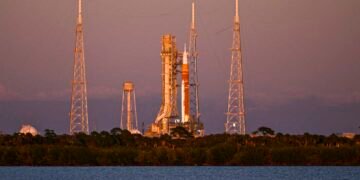























NASA Delays Artemis II Launch by At Least a Month
NASA has postponed the launch of its Artemis II lunar fly-by mission, now targeting a date in March rather than the previously scheduled window. This mission, set to carry four astronauts, marks a significant milestone as the first crewed trip to the Moon in over five decades.
Why It Matters
The Artemis II mission is pivotal not only for its historical significance but also as a crucial step towards future lunar exploration, including plans for sustained human presence on the Moon and eventual missions to Mars. The technical challenges faced highlight the complexities of modern space travel as NASA aims to ensure safety and mission reliability.
Key Developments
- The Artemis II mission, which involves a crew of four—three Americans and one Canadian—has been delayed by at least a month due to issues uncovered during pre-launch testing.
- The latest target for launch has been pushed to March, with potential opportunities on March 6, 7, 8, 9, and 11.
- Testing revealed a hydrogen leak during critical fuel preparations at the Kennedy Space Center.
- Additional complications arose with the Orion capsule, including valve issues and problems related to weather conditions affecting communication systems.
- The crew members will undergo a re-quarantine period approximately two weeks before the next launch attempt.
Full Report
Testing and Delays
On Monday, during a critical phase known as the wet dress rehearsal, mission managers detected a hydrogen leak that impeded further testing of the Space Launch System (SLS) rocket. Launch director Charlie Blackwell-Thompson reported that while initial troubleshooting resolved one leak, a subsequent leak emerged during the pressurization of the fuel tank.
Additional Challenges
The rehearsal aimed to prepare the Orion capsule for crew transport and highlighted other technical challenges, such as difficulties with a valve that pressurizes the spacecraft and communication issues exacerbated by cold weather. NASA Administrator Jared Isaacman emphasized that safety for both the astronauts and the public remains a top priority as the agency works through these issues.
Next Steps
NASA will conduct another wet dress rehearsal before approving the next attempt to launch the astronauts. Blackwell-Thompson remarked on the day as a success in some areas despite the challenges faced, indicating that further work is required to address the issues identified during testing.
Context & Previous Events
Hydrogen leaks were also a notable complication during the Artemis I mission testing in 2022, prompting NASA to apply lessons learned from that experience to the current preparations for Artemis II. This upcoming mission is particularly historical, as it represents the first human return to lunar orbit since the conclusion of the Apollo program in 1972.






