






















In light of ongoing geopolitical tensions, Russia has been excluded from several prominent international sporting events, including the 2022 World Cup and UEFA’s Euro 2024, effectively sidelining the nation from competitive football. This decision follows Russia’s ongoing military actions in Ukraine and underscores the complex interplay between sports and global politics.
The ramifications of Russia’s exclusion from international competitions extend beyond football, reflecting a significant shift in how global sporting bodies are addressing issues of national conduct and human rights. This situation raises fundamental questions about the role of sports in international diplomacy and the standards governing participation in competitive events.
Key Developments
- Russia was banned from competing in the 2022 World Cup and UEFA’s Euro 2024 due to its military actions in Ukraine.
- Despite the ban, Russia has continued to play matches against nations that are not aligned with Western sanctions.
- Ukrainian sports officials have voiced strong opposition to Russia’s return to international competitions, emphasizing the ethical implications of allowing such participation amid ongoing conflict.
- The International Paralympic Committee (IPC) recently eased restrictions on athletes from Russia and Belarus, drawing criticism from Ukraine.
Full Report
Exclusion from International Competitions
Following its invasion of Ukraine, Russia faced a ban from major international tournaments, including the 2022 World Cup and UEFA’s Euro 2024. The absence has left Russian athletes in a state of limbo, with the nation also barred from participating in the upcoming 2026 World Cup. However, Russia continues to hold matches against nations outside of Western governance, circumventing restrictions set by FIFA and UEFA.
Ukrainian Concerns
Ukrainian football officials have expressed strong objections to any potential Russian involvement in international sports leagues. The Ukrainian Association of Football has warned that as long as the conflict with Ukraine persists, the visibility of the Russian flag and national identity in the sporting arena is unacceptable. “War is a crime, not politics,” stated a representative from Ukraine, emphasizing that sport should not be politicized to justify aggression.
Paralympic Controversy
Recently, the IPC faced backlash for lifting its ban on Russian and Belarusian athletes. Ukrainian officials criticized the decision, describing it as allowing competitors from these countries to represent flags they claim are emblematic of aggression and violence. Although some governing bodies have chosen to maintain their bans, athletes from Russia and Belarus will miss the upcoming Winter Paralympics due to late decisions regarding qualification and participation.
Context & Previous Events
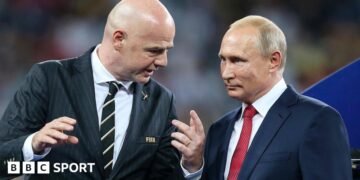
In 2018, FIFA President Gianni Infantino received the Russian Order of Friendship medal from President Vladimir Putin during the World Cup held in Russia. This event, once a symbol of international unity through sport, has become overshadowed by the current geopolitical climate and the ongoing conflict in Ukraine.






