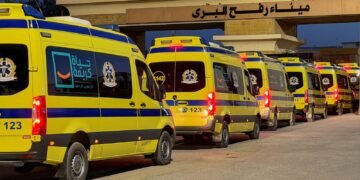























Rafah Crossing Reopens Amid Urgent Health Crisis in Gaza
The Rafah crossing between Gaza and Egypt recently reopened, marking a critical moment for many individuals in desperate need of medical care. However, the process has proven far from simple, with only a limited number of patients able to cross, underscoring the continued complexities of the region’s humanitarian situation.
Why It Matters
The reopening of the Rafah crossing holds significant implications for thousands of individuals in Gaza requiring urgent medical attention. As humanitarian organizations assess the needs, the current limitations highlight the urgency of the situation and the potential for further escalation if access to medical care remains restricted.
Key Developments
- Israeli authorities confirmed the crossing was open for civilians, but only a small number managed to leave Gaza by sunset.
- Out of thousands in need, just five patients have successfully crossed into Egypt for medical treatment.
- The World Health Organization endorsed medical travel for patients like Ahmed, who suffers from a bullet lodged in his head.
- Plans are underway to facilitate the evacuation of 50 patients daily, but this figure falls short of the nearly 20,000 patients awaiting care.
- UNRWA officials stress the need to ramp up the evacuation process to address the backlog of critically ill patients.
Full Report
Current Status of the Rafah Crossing
The reopening of the Rafah crossing has been met with cautious optimism. Although the crossing was officially indicated to be open, logistical challenges meant that many individuals remained unable to cross throughout the day. Only a few people made it to the Egyptian side, drawing attention to Israel’s stringent oversight of the process.
Desperate Need for Medical Care
Among those who successfully crossed was Ahmed, a young man whose critical condition required urgent medical intervention. His father reported that the World Health Organization had recognized the dire need for treatment that is unavailable in Gaza. Ahmed’s chances for recovery, even in a modern medical facility, were estimated at just 10%—a slight glimmer of hope amid a grim reality.
Plans for Increased Patient Evacuations
Current plans aim for an increase to 50 patients per day being evacuated. Nonetheless, this figure is overshadowed by the staggering demand for medical aid. According to Sam Rose, the director of affairs in Gaza for UNRWA, a monumental backlog of close to 20,000 patients requires prompt attention, many of whom are critically ill and cannot afford delays. Efforts are being made to ensure the process is effectively managed to prevent a return to conflict, which poses a significant risk to the region’s stability.
Challenges Ahead
While the reopening of Rafah is seen as a step forward, it remains contingent on various factors, including the security considerations of the Israeli government and the influence of regional dynamics. With a general election looming in Israel, the government’s approach to humanitarian access could shift, impacting the future of patient evacuations.
Context & Previous Events
The Rafah crossing’s reopening is part of a broader framework established by US-led efforts toward peace in Gaza—a development many view as long overdue. Despite physically linking Gaza and Egypt, the Israeli government retains control over the movements of individuals crossing, further complicating the humanitarian landscape.






